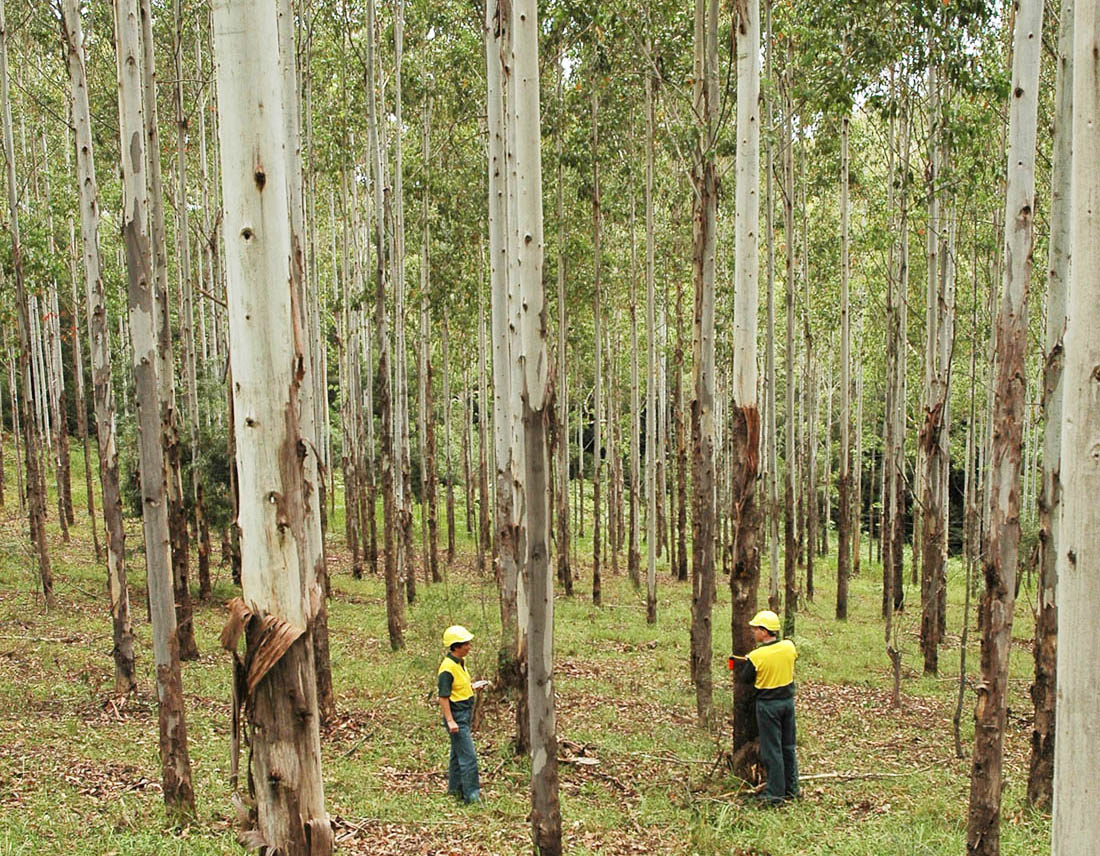

Note that the plantation, production and price sections all provide commentary for the 2023-24 financial year.


Forestry
- Forestry & Logging had a 2025 GVP of $468.0 m, which is an increase of 6% year-on-year.
- NSW softwood production increased 0.8% year-on-year to 3.5 million cubic metres, the second smallest volume harvested since 1998-99
- NSW had 352 thousand hectares of commercial plantations in 2023
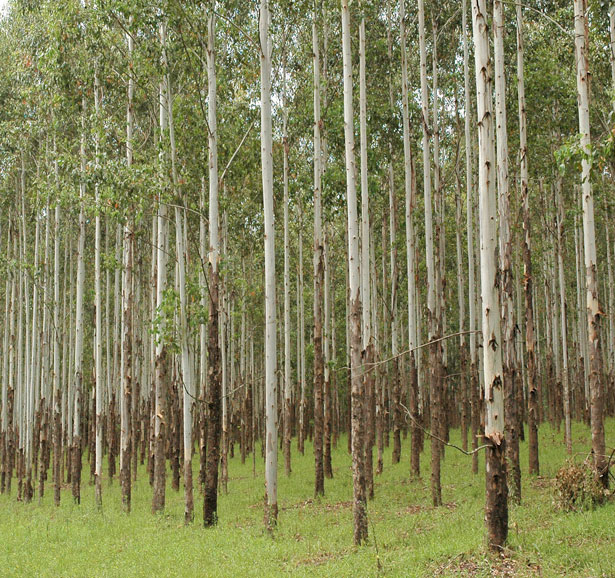
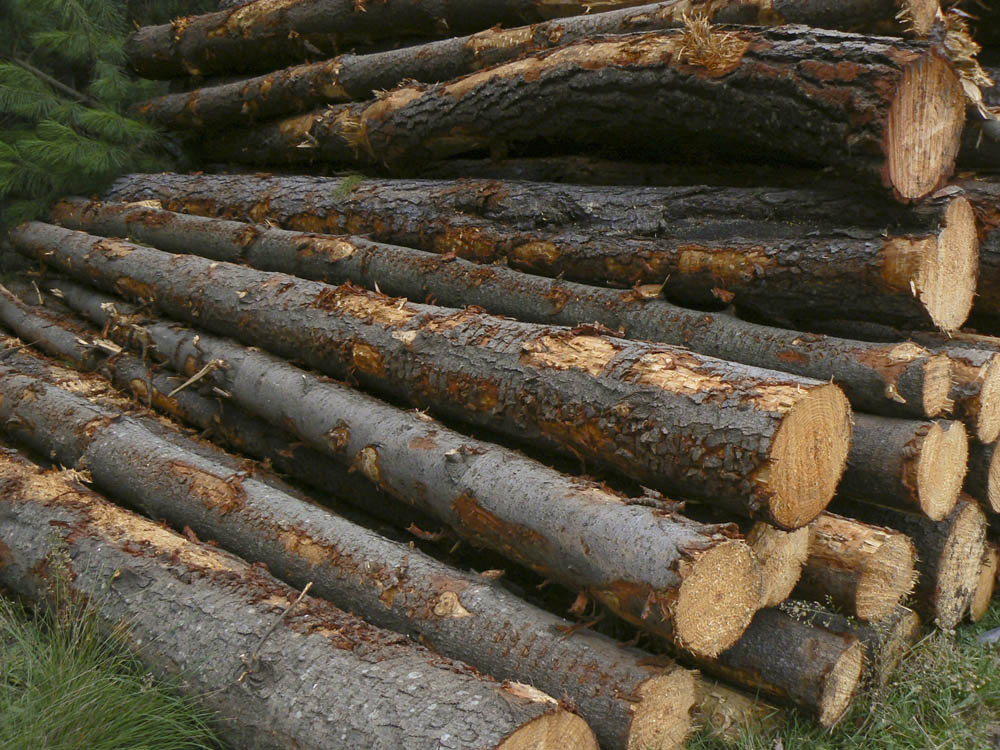
Over the 2024-25 financial year employment in Forestry & Logging averaged 1,675 people, Wood Product Manufacturing employed 12,228 people, and Pulp, Paper & Converted Paper Product Manufacturing employed 4,344 people. Total employment across forestry and downstream manufacturing across NSW totalled 20,157 people. There has been an employment increase of 1,869 people, or 10 per cent, since the previous financial year.
Native forest and commercial plantations
The NSW Forest area includes both native forest and commercial forest plantations. In 2023, NSW had 20.3 million hectares of forest, covering 25.3 per cent of the total NSW land area. Of this 20.3 million hectares, 19.9 million hectares (98.0%) is native forest (dominated by native tree species naturally associated with forest in that location and located within their natural range), 368,000 hectares (1.8%) is commercial plantations (comprised of hardwood or softwood plantations managed commercially to supply logs for the manufacture of wood products) and 34,000 hectares is classified as ‘other’ forest (comprised mostly non-commercial plantations and planted forests of various types including smaller farm forestry and agroforestry plantations, environmental plantings, plantations within the reserve system, and plantations regarded as non-commercial).
69
Forestry Corporation Defined Forest Area by Forest Type 2023-24
NSW Native Forest Types 2023
NSW hosted 351,600 hectares of commercial plantations in 2023-24, second only to Victoria’s 380,700 hectares. Softwood plantations accounted for 84.2 per cent of commercial plantations at 296,200 hectares, with a hardwood plantation area of 55,000 hectares. The total area of plantations and the proportion of softwood and hardwood have been relatively stable since 2018-19.
68
In September 2025 the NSW Government announced a temporary moratorium on timber harvesting for 176,000 hectares of state forest in the Mid North Coast as part of the establishment of the Great Koala National Park 139 . This will area includes Defined Forest Area managed by the Forestry Corporation of NSW.
Production
Total log production in NSW increased 4.8 per cent in 2023-24 from the previous year, with 4.5 million cubic metres harvested. NSW softwood increased 0.8 per cent year-on-year to 3.5 million cubic metres, the second smallest volume harvested since 2003-04. The production of softwood saw and veneer log production has declined 8.4 per cent year-on-year to 1.6 million cubic metres, continuing a trend that started in 2021-22. Paper pulp log production increased year-on-year, rising 10.9 per cent to 1.8 million cubic meters. Other minor softwood log products were steady at 137 thousand cubic metres.
68
Hardwood production was up 21.6 per cent to 1.02 million cubic metres in 2023-24 68 . This increase was driven by log production from hardwood native forests which increased 12.6 per cent year-on-year. Log production from hardwood plantations fell 24.1 per cent year-on-year.
Hardwood production mainly consisted of sawlogs (512 thousand cubic metres harvested) and woodchip pulp logs (474 thousand cubic metres harvested). Other minor hardwood products were steady year-on-year at 32,000 cubic metres.
68
The Forestry Corporation of NSW cited softness in new dwelling construction as a factor behind the fall in sawlog production in the softwood sector 93 . ABS data showed new dwelling commencements of houses in 2023-24 was down 21% for the NSW private sector 24 , reducing the demand for structural timber.
Price
ABARES log price index measures nominal prices paid per cubic metre at the mill door and includes production, harvest and haulage costs. The 2023-24 price indexes for native hardwood logs declined slightly (-1.8%) year-on-year, were stable for hardwood plantation logs (0.2%), and rose for softwood plantation logs (2.1%).
68
Log Price Indexes by Log Type
- Hardwood Native saw and veneer logs
- Hardwood Native pulplogs
- Hardwood Plantation saw and veneer logs
- Hardwood Plantation pulplogs
- Softwood Plantation saw and veneer logs
- Softwood Plantation pulplogs
Source:
ABARES (2024)
Trade and macroeconomic conditions
NSW wood product exports in 2024-25 were valued at $42 million, down 4.3 per cent year-on-year. India remained the top export destination by value, absorbing 43.8 per cent of total exports, though it decreased in value by 9.5 per cent year-on-year. Softwood sawlogs were the dominant export category, feeding into India’s construction, housing, furniture, and handicrafts industries. Taiwan (15.0% of total exports), New Zealand (13.7%) and China (8.3%) were the next biggest purchasers of forestry products from NSW based on total product value.
155
The timber market relies heavily on the housing and construction sector as a key source of demand and recent data has shown that there is a close relationship between housing completion and sales of timber products. 89 Demand for housing continues to rise, driven largely by an ongoing housing supply shortage, but despite the impacts of declining housing affordability, and high construction and land costs. These factors have meant that residential construction rates have continued to reduce, coupled with a decline in demand for free standing homes, resulting in decreased demand for timber. 90
In May 2023, China lifted its ban on Australian softwood log imports. The ban, which was commenced in 2020, resulted in a collapse of Australian timber exports. For NSW the total value of annual shipments to all countries fell from $181.3m in 2019-20, to a low of $34.7m in 2021-22, and has since slowly recovered to $42.0m in 2024-25. Whilst exports of forestry products to other key markets such as India ($18.4m, 2024-25) and Taiwan ($6.3m, 2024-25) have increased in value over the past few years, the loss of the highly valuable Chinese market (from $157.3m, 2019-20 down to $3.5m, 2024-25) has had a significant impact on the total value of NSW forestry exports. 155 Industry analysts suggest that while Australia’s timber exports to China are slowly recovering, they are unlikely to reach the same pre-Covid levels due to multiple factors including decreased demand in China, expansion of local timber production, and also investment in Oriented Strand Board (OSB) production outside of China. 203
NSW yearly forestry exports by country
Employment and Value Added
Over the 2024-25 financial year, there were 1,675 people working in Forestry and Logging, and a further 1,910 people working in Forestry Support Services , up 60 per cent and 179 per cent, respectively. On the manufacturing side, average employment levels in Wood Product Manufacturing rose 3% to 12,228, while employment in Pulp, Paper and Converted Paper Product Manufacturing fell 6% to 4,344 in 2024-25. Growth in the total forestry and timber manufacturing industry was largely driven by higher employment year-on-year in the Forestry Support Services and Forestry and Logging sectors.
22
Estimates of industry value added in 2024 for Forestry & Logging ($455.6 m, 12.8% year-on-year increase), Wood Product Manufacturing ($1,663.9 m, 9.6% increase), and Pulp, Paper & Converted Paper Product Manufacturing ($1,071.2 m, -9.2% decrease), increased 3 per cent year-on-year to $3,190.7 m for NSW, and for Australia was $12,313.8 m, which had a year-on-year increase of 1 per cent. Local government areas (LGAs) in New South Wales that significantly contribute to the GVA for Forestry & Logging in 2024 include Snowy Valleys, Snowy Monaro Regional, Port Macquarie-Hastings, Clarence Valley, and Bega Valley. 110