



cropping
Rice
- GVP $194 million est., down 30% year-on-year.
- Total paddy rice production reached 474 thousand tonnes, down 23% year-on-year.
- Exceptional crop yields, with average exceeding 11 tonnes/ha
Production
Rice Production & Water Allocations Chart m
- Murray-Murrumbidgee GS Allocations (RHS)
- Rice Production ('000 tonnes)
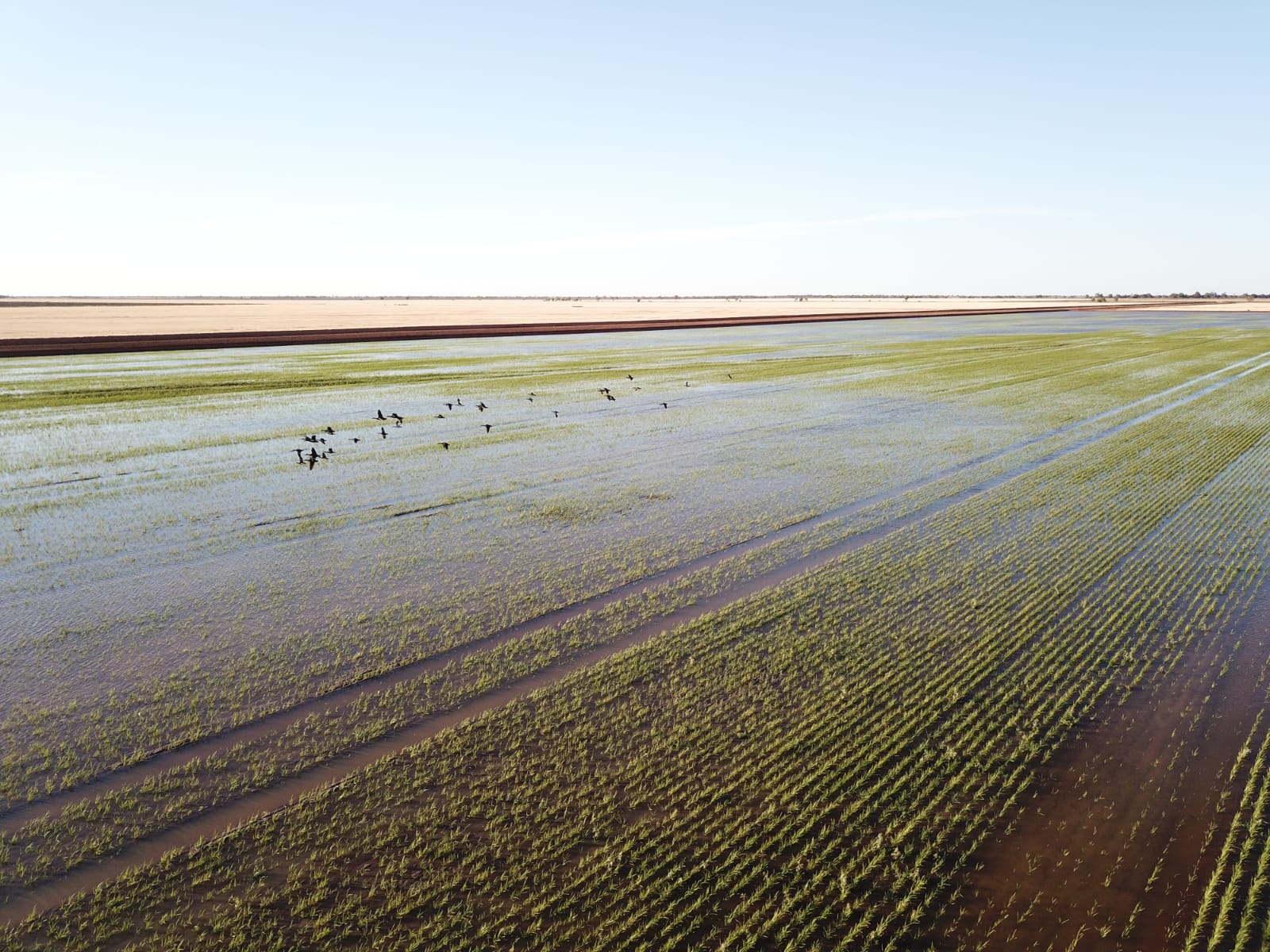
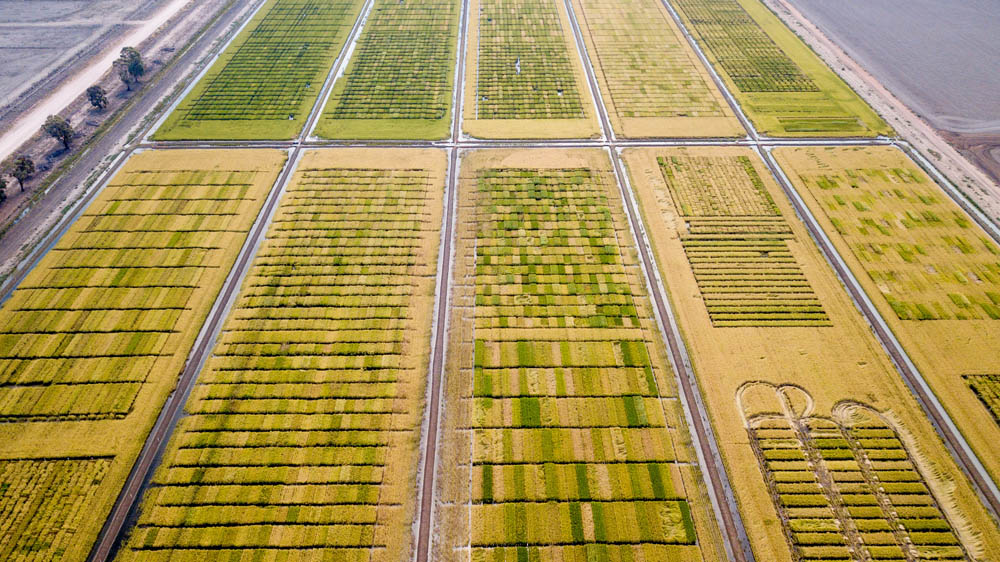
Optimal growing conditions were generally experienced throughout the season. This included, adequate overnight minimum temperatures through the sensitive microspore crop development phase, and a warm to hot finish which brought the crop in earlier than normal. 200 This set the crop up for a robust average yield of 11.01 tonnes/ha, and only the third time the NSW crop has exceeded the 11 tonnes/ha benchmark. Exceptional farm level yields above 14 tonnes/ha were reported regularly 200 along with expectations of a potential world record individual crop yield of 17.3 tonne/ha. 158 The increased yields helped to bolster total production levels at 474 thousand tonnes, 5% above the 10-year average levels. 3
The Northern Rivers rice growing region had a dry start to the season, however the rice crops were one of the few agricultural beneficiaries of significant rainfall received from ex-Tropical Cyclone Alfred, which provided the rice crops much needed moisture. The fungal disease rice blast, was detected for a second year in the Northern Rivers, however improved management practices and varietal selection, including substitution of Topaz for the Tachiminori variety, helped to lessen the impact of the disease. 170
Macroeconomic and Price
Short-medium grain rice production in the US, Australia’s main export competitor, dropped by 22% in 2024-25. Despite the fall, production was still 59% higher than the heavily drought impacted 2022-23 FY. 178 The last two seasons have helped to stabilise US medium grain rice supply and rebuild stocks. In turn, the US lifted its exports to the highest levels in five years, while also importing less. As a result, US short-medium grain farm gate prices fell 38% from the recent drought induced price peak. 178
US short-medium grain exports increased by 7% in 2024-25, with the Middle East accounting for most of this increase. The Middle East is also a key market for Australian rice. 180 The increased US supply of short-medium grain rice and lift in exports over the past two financial years has underpinned a steep correction in US medium grain export prices. While US and Australian export prices often diverge, pricing parity over the course of 2024-25 was much closer than it has been since late 2021. 87 155 The fall in US prices has also been reflected in Australian rice export prices which trended slightly lower during the financial year, reinforced by lower tender pricing offered by trading partners. 155
Rice International Export Prices q
- Thailand, 5% Broken - Long Grain
- US No. 2, 4% Broken - Long Grain
- US California Medium Grain (FOB mill)
- Australian Rice Export Price (Cost & Freight)
Trade
Rice Trade aj
- Export value
- Import value
- Export Average Value
- Import Average Value
Australian rice export values rose by a modest 1% year-on-year to $363 million. A 5% increase in volumes to 251 thousand tonnes was partially offset by lower export prices. The value of rice exports was 41% above the 10-year average levels, as rice supply allowed for sufficient exportable surplus to meet international market demand. 155
Lower mill-out rates in 2024-25 were the key factor driving lower pricing for the Australian crop as some grain was not able to be placed into premium markets. The large Californian short-medium grain crop over the past two seasons provided another headwind, increasing direct competition with Australian rice in key markets and resulted in lower tender pricing by importers. A slightly lower Australian Dollar provided some support to USD denominated exports. 159
Meanwhile, Australian rice imports rose 6% in 2024-25 in value terms to a new record of $410 million, with the top 3 origins being Thailand, India and Vietnam. 155 Imports of milled rice into Australia accounted for approximately half of Australia’s domestic rice supply in 2024-25. Imports mainly focus on supply of long grain and specialty varieties which are not grown at scale domestically. During low production years, imports also act as a buffer to supplement domestic production.
Outlook
The recently announced US reciprocal tariffs (10% on most Australian goods) are not expected to have a significant direct impact on Australian rice exports, with the US not being a major export destination. However, the tariffs will have an indirect impact on global rice trade flows with the US accounting for 4% of total global rice trade in 2024-25. 180
US short and medium grain exports are forecast to increase in 2025-26, with larger quantities expected to go to Japan, South Korea and Israel. Recently negotiated trade deals are likely to support rising US rice exports to some of these countries. 182 With that in mind, it’s likely that importers will favour California rice over NSW rice, resulting in downside risk to final prices. SunRice price guidance for the 2025-26 crop is in the range of $380 to $450 tonne with processing overheads and global medium grain supply expected to act as constraints on prices. Countering this, lower domestic supply and forecast weakness in the Australian Dollar are expected to act as a buffer. 160


