



livestock
Eggs
- GVP $451 million est. Up 8% year-on-year
- Average farm egg prices increased 12% year-on-year
- Highly Pathogenic Avian Influenza outbreaks caused some supply disruptions
Production
The national layer flock suffered losses, of approximately 7% of Australia’s egg production capacity during 2024 with additional losses in Victoria in early 2025. 44 66 Since then many of the farms impacted have returned to normal production while others farms have increased their capacity. 44 Lean egg supply chains which are a result of the perishable nature of eggs and biological induced supply lags, makes recovery a complex process. This includes the supply of additional replacement pullets to rebuild flock numbers over and above regular industry requirements.
Australia remains free from the more severe H5 strain of bird flu, and as of mid-2025, the country had successfully eradicated H7 HPAI from poultry, following the containment of the final outbreak in northern Victoria. 25
Production from barn systems continued to grow with reported barn eggs share of total egg sales by major supermarkets in 2024-25 increasing to 28% from 21% in the prior year. Free range share was stable year on year, while eggs from conventional cage production systems fell to 13% share in 2024-25. 46 It is important to note however, that the market share figures do not include eggs sold through wholesale of food service outlets.
While production has been supported by lower prevailing feed costs during 2024-25 including for feed grains and meals such as soybean meal, other costs such as electricity, labour, and infrastructure have remained elevated. 8 3 186 Increasing biosecurity requirements also remains an ongoing cost to layer production systems. 8
NSW egg production ba
Price
Retail prices of eggs in the supermarket majors increased by 15% year-on-year for barn system eggs, 20% for free range and 21% year-on-year for cage production systems. 46 The lower price increase in barn systems reflecting the increased efficiencies achieved as these barn systems come online.
Retail egg prices by production type and gross unit value
- Average gross unit value
- Retail Cage egg
- Retail Free range
- Retail Barn-laid
Trade
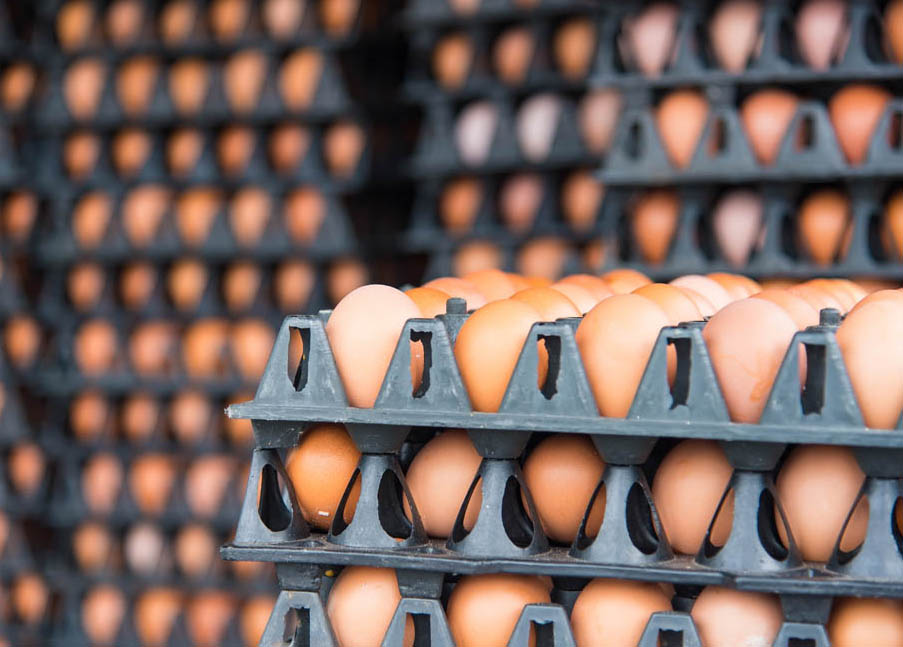
Australian imports of egg products increased 57% year-on-year to total $26.9 million. These imports included $20.1 million of processed egg products, not-in-shell, 52% of which was sourced from the Netherlands in 2024-25. 155
Internationally, elevated egg prices were observed in a number of countries and attributed to highly pathogenic avian influenza (HPAI). In the United States HPAI control measures saw 10.8% reduction in layers (non-organic flocks) as of January 2025. 174 As a result, fresh egg prices in the first quarter of 2025 averaged 220% above the average producer prices of 2024. The reduction in layer the flock also coincides with a historically low US cattle herd, the result being higher prices for a range of protein sources including eggs. However, prices have since eased with supply returning from domestic production and imports. 185


