


livestock
Wool
- GVP $923 million est., down 8% year-on-year
- Wool exports $494 million, down 25% year-on-year
- Eastern Market Indicator edged higher to $11.67/kg, up 1% yoy.
Production
Wool Testing Volumes
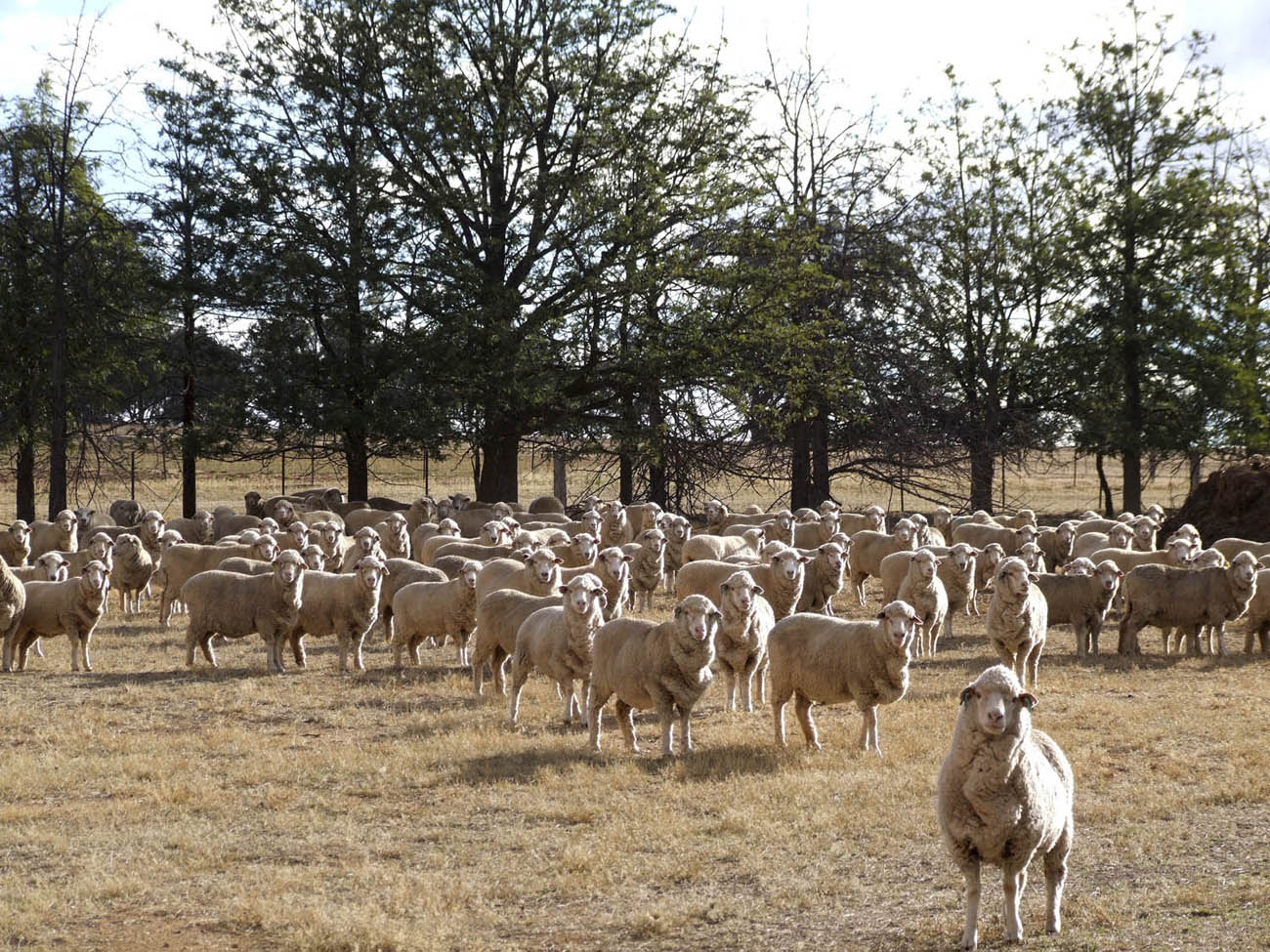
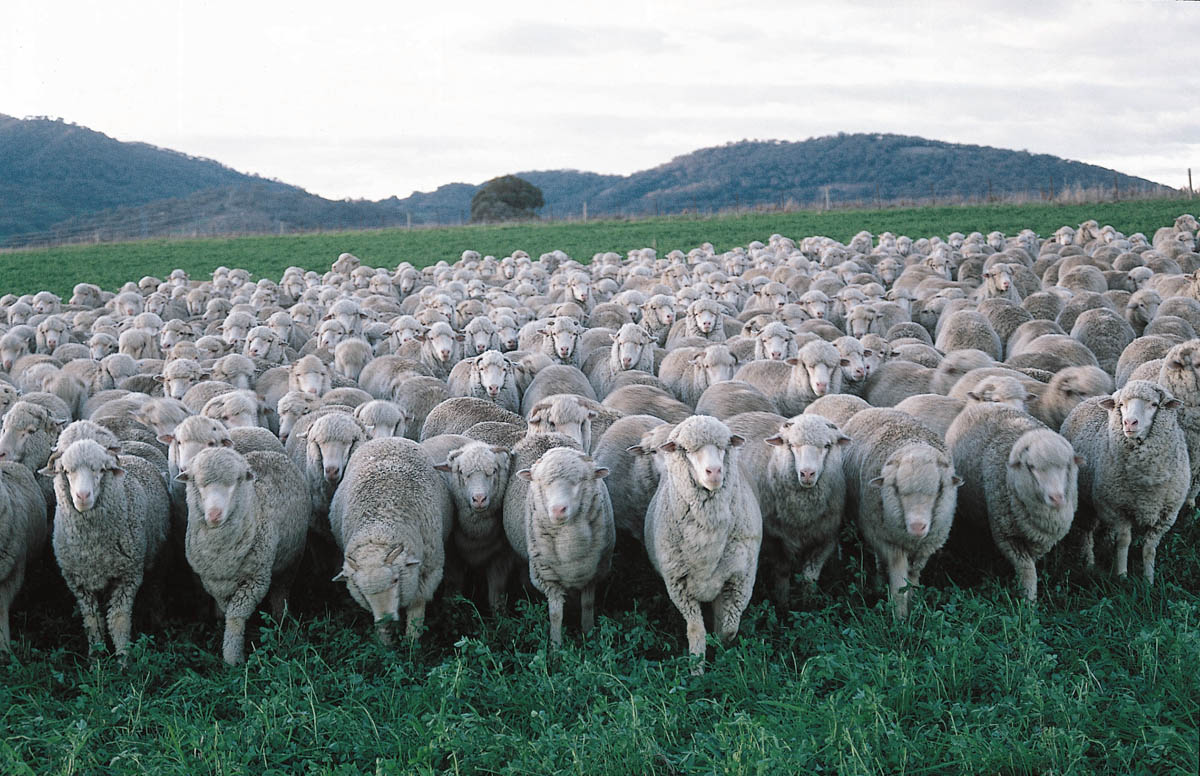
The total sheep flock size in NSW in 2024-25 declined by 2 million head, to 24.4 million, which remained the largest in Australia. 118 As such NSW was the largest wool-producing state, ahead of Victoria (65.6 million kgs greasy) and South Australia (58 million kgs greasy). 35 Better seasonal conditions in NSW allowed the state to outperform the other mainland states, which all recorded larger production falls percentage-wise.
Wool production forecasts were gradually scaled down over the year. The Australian wool clip fell 8% to 300 million kg greasy. Higher sheep slaughter spurred by dry conditions in Victoria and Western Australia, which saw higher turnoff by wool producers as they faced higher costs and lower relative returns for wool 35 .
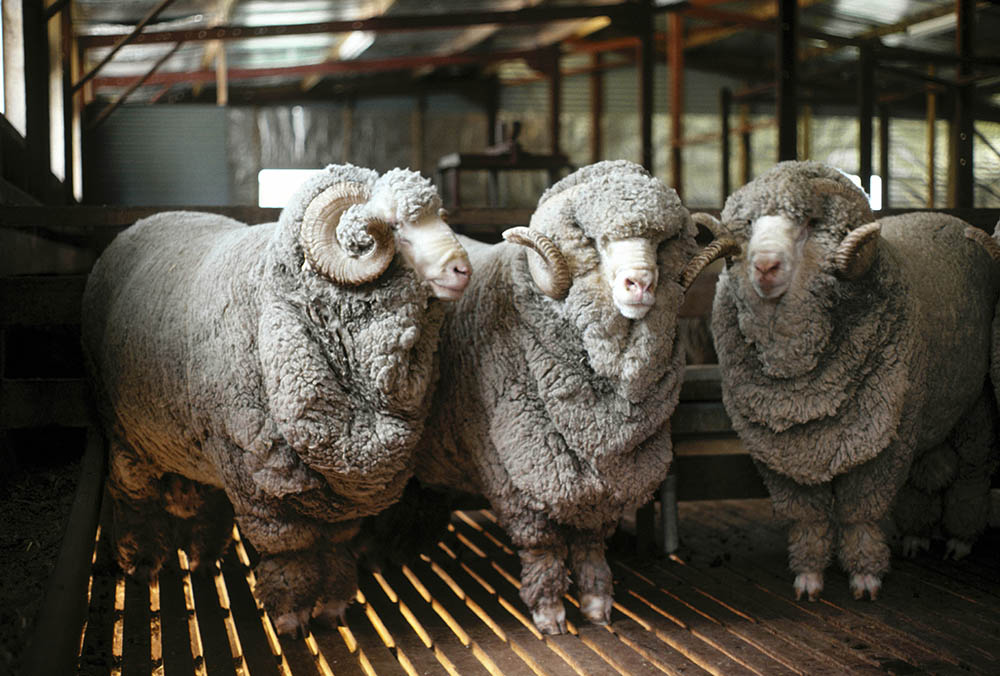
According to AWTA test volumes there was a higher supply of fine wools below 16.5 microns. Most wools produced in NSW were in the fine 17.6-18.9 micron range, which represented 17% of the total. 36
Shearer availability was less of a factor this year due to drought in other states, which encouraged more shearers to come to NSW. The Shearing Contractors Association of Australia noted that this was the first year since 2019 that there was a surplus of shearing capacity. 173
Price
Early in the year, through winter and spring, lacklustre prices meant that producers were holding back bales for sale. The volumes offered at auction in this period were well below year-on-year levels, a trend that had begun in April 2024.
There has been a convergence of wool prices across the average micron price guides since 2022, when premiums for 16.5 micron wool surged to over $15/kg over and above the 21 micron price. Since then, price premiums for the superfine sector have returned to around $5/kg, in line with historic levels. This premium came at a time when economic growth picked up following COVID lockdowns in 2020 and 2021, and international demand for high quality, fine wools surged 148 . However, the jump in inflation in advanced economies slowed world economic growth and retail sales. 143 This premium for super fine wool over the 21 micron price narrowed to its lowest level in June 2025, highlighting the tough conditions in the wool market in the past couple of years.
In 2024-25 coarse wools and the cardings sector performed best with the 28 micron wool 14% higher than the 2023-24 average. Most fine and superfine wools were down on year-ago levels, with the 16.5 micron range the only fine wool category to hold ground, with the 2024-25 average 1% higher than the previous year.
Wool Price by MPG
Trade
China Apparel Exports
Exports from NSW were lower to each of the major markets. China bought $429 million in wool from NSW, down 24% from the year before. Wool sales to Italy fell 34% to $32 million, while sales to India had the steepest decline of 44% to $12.5 million. Lower consumer demand for wool products persisted in the last year, with signs of substitution toward cheaper fabrics 5 . Chinese exports of wool garments fell in 2024, while cotton and synthetic fibres both increased 175 .
By volume, NSW exports were down 20% to 58,411 tonnes. This accounted for 20% of Australian wool exports, which totalled 291,769 tonnes. Nationwide, export volumes fell 14%.
Australian wool exports eased to $2.4 billion in 2024-25, down 11%. China bought $2.1 billion of the total, firmly maintaining its place as the dominant buyer of wool. Australia is the largest exporter of wool and approximately six times higher than the next largest country, followed by New Zealand and South Africa. Wool exports have faced challenges with the decline in demand in the downstream textile market. With China the largest buyer, Chinese exports of wool fabrics and apparel have not recovered from the severe drop in 2020, and consumers have increasingly switched to synthetic fibres.
Outlook
Producer sentiment was largely positive heading into the 2025-26 financial year, although the national breeding ewe flock is expected to decline. The drought conditions across southern Australia and extending into Southern NSW have reduced pasture availability and increased feed costs. 126 While rains through September and October 2025 partially alleviated that, conditions in Southern NSW remain dry heading into summer. High lamb and mutton prices have encouraged some producers to offload sheep.
The Australian Wool Production Forecasting Committee 35 forecast NSW and Australian wool production to fall again in 2025-26, with the NSW forecast at 100.4 million kgs greasy, a 8.7% fall over 2024-25 levels. Australia’s shorn wool production is forecast to fall 10.2% to 252 million kgs.