
Milk

  • GVP $888 million up 1% year-on-year
  • Milk production up 3% year-on-year, to 1,071 million litres
  • Average farm gate prices marginally lower in 2024-25, down on average an estimated 1% year-on-year
NSW milk production rose 3% to 1,071 million litres in 2024-25 on the prior year, against the national trend of lower overall total milk production, NSW production accounted for 12.9% of milk volume. NSW average farm gate milk prices were estimated to have been marginally lower by some 1% in 2024-25. At the same time dairy product exports a relatively minor component for the NSW domestic focussed dairy industry lifted for 2024-25, as did dairy exports nationally. A rebalancing of the Chinese milk market and supply and demand, is expected to support global dairy markets in the medium term with some signs emerging of recovery in Chinese dairy product imports. While competition between Australian milk processors for domestic supply in the context of flat or declining national production is expected to continue to support farm gate pricing in the near term.

Production

Monthly Milk Production in NSW

  • Inland
  • Central
  • North Coast
Source: Dairy Australia (2025)
NSW milk production was 1,071 million litres in 2024-25. NSW bucked the trend of national milk production in 2024-25, outperforming all other states to increase 3%. NSW has increased its share of national production to 12.8%, comfortably the second highest production by state. 80

Despite dry conditions in southern NSW, particularly in Murray and Western regions, production in the Southern region rose 8%. By comparison, production in the Inland/Central region dropped slightly, down 1% to 259 million litres. Milk production in the North Coast region was down 3% to 253 million litres in 2024-25. The floods in the Mid North Coast and Hunter regions had an impact on milk production in the North Coast region, with monthly production data showing that May 2025 was the lowest level in over 3 years, at 18 million litres. 80

Australian milk production was 7,749 million litres, down 0.4% on year-ago levels. This decline came from lower production in Tasmania (down 3.4% to 900 million litres) and Western Australia (down 3.5% to 305 million litres). Victoria, the dominant dairy producer in Australia, had a broadly flat year with milk production 0.1% lower to 5,000 million litres. 80

Price

Industry sentiment in NSW was increasingly positive in early 2025, with stable prices and favourable seasonal conditions on the whole. Opening prices for 2024-25 were lower than the opening prices in the previous year, however a strong lead from overseas dairy markets lifted milk prices throughout the year. Farm gate prices in 2024-25 ended marginally lower by approximately 1% from the previous year, with the average price estimated at 80.5 cents/litre ($11.06/kg milk solids (MS)) for NSW central and south coast regional producers and 88.3 cents/litre ($11.84/kg MS) for northern NSW producers. bb 41
Retail milk, ice cream and other dairy product prices had steadied in 2024-25. These products had risen rapidly in late 2022 and 2023. Cheese, on the other hand, did not enjoy the same price increases in that period, and had instead risen nearly 4% over the year. 17

Milk - Dairy CPI Sydney

  • Milk
  • Cheese
  • Ice Cream and Other Dairy
Source: ABS (2025)

Milk - Change in Commodity Milk Value

Source: Australian Dairy Products Federation (2025)

Trade

NSW dairy exports were $361 million, up 5% over year-ago levels. China remained the largest market, accounting for 73% of total NSW dairy exports a 7% increase year-on-year. Indonesia became the second largest market in 2024-25 for NSW dairy product exports with a value of $19 million a 75% increase on the prior year. 155 Australian dairy exports rose significantly, up 10% to $3.4 billion in 2024-25. Lower national exports to China, down 7% year-on-year in value terms in 2024-25, were offset by broad growth in value across other Asian markets while Middle Eastern markets also saw broad growth. 155

China’s imports of dairy products have declined over the past four years with whole milk powder imports estimated to be down 51% in volume terms in 2024-25 from 2020-21 levels and skim milk powder down 46% over the same period. 190

Declining imports coincided with increased domestic milk production in China in response to high world prices and government policies but domestic production has declined through 2024-25 a result of supply-demand imbalances. Average Chinese farm gate prices fell during 2024-25 to be almost 30% below their 2021-22 peak. 191 A slowing domestic economy and low birth rates has dampened demand for some milk products and led to surpluses. 191 42 The rebalancing of the Chinese milk market is expected to support global dairy markets in the medium term with some signs emerging of recovery in Chinese dairy product imports during 2025 including for milk powders. 28 82

While Australia remains a net dairy exporter by value, imports of dairy products increased 11% year-on-year to total $1.8 billion in 2024-25 with cheese imports representing 51% of the total value of dairy imports. 155

Outlook

High global milk prices have encouraged production in the US and near-term prices are expected to ease with higher New Zealand production also expected to contribute to global supply and offsetting some decline in European Union and Australian production. At the same time global dairy product demand is expected to rise although at a lower rate than supply in the short term. 191 4

Despite this global context, lower national production and competition from processors for milk is expected to support farm gate prices in the short term. 4 Average dairy farm profitability from 2020-21 to 2023-24 have been higher than 10-year averages, supported by higher farmgate milk prices. NSW dairy farms' average rate of return to capital (excluding capital appreciation) was estimated at 3.1% in 2023-24 similar to the prior year and above the long term average of 2.2%. Stable milk pricing in NSW are expected to help maintain average farm profitability in 2024-25 above the long term average. 10 Longer term, structural factors including high farmland values continue to encourage industry exits and act as a barrier for new entrants nationally. 80
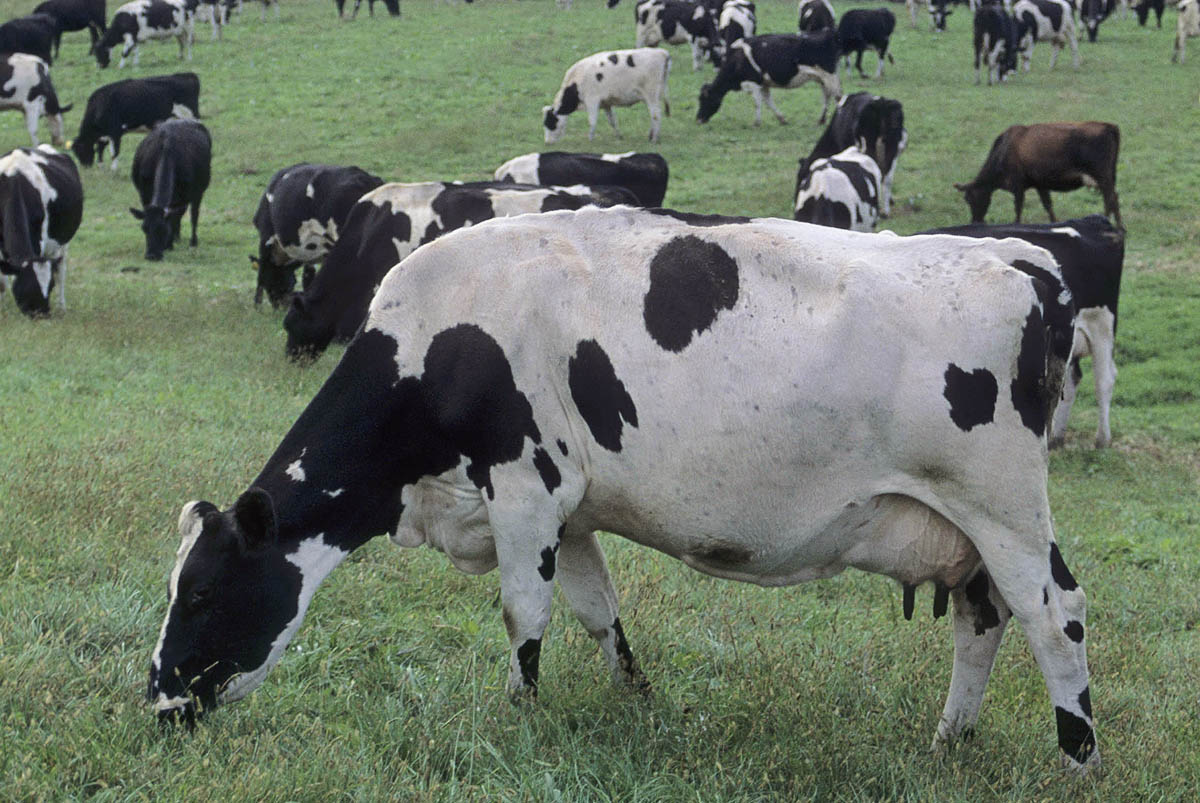
Dairy cows grazing in a field