



Forestry
- GVP $389 million est. Down 8% year-on-year.
- NSW softwood production decreased 11.7% year-on-year to 3.5 million cubic metres, the smallest volume harvested since 1998-99.
- NSW had 349.6 thousand hectares of commercial plantations in 2022-23.
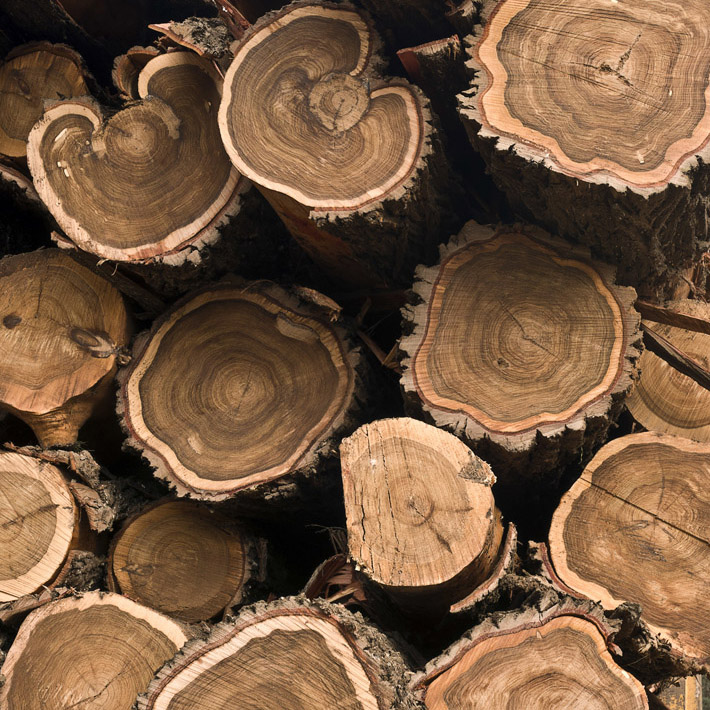
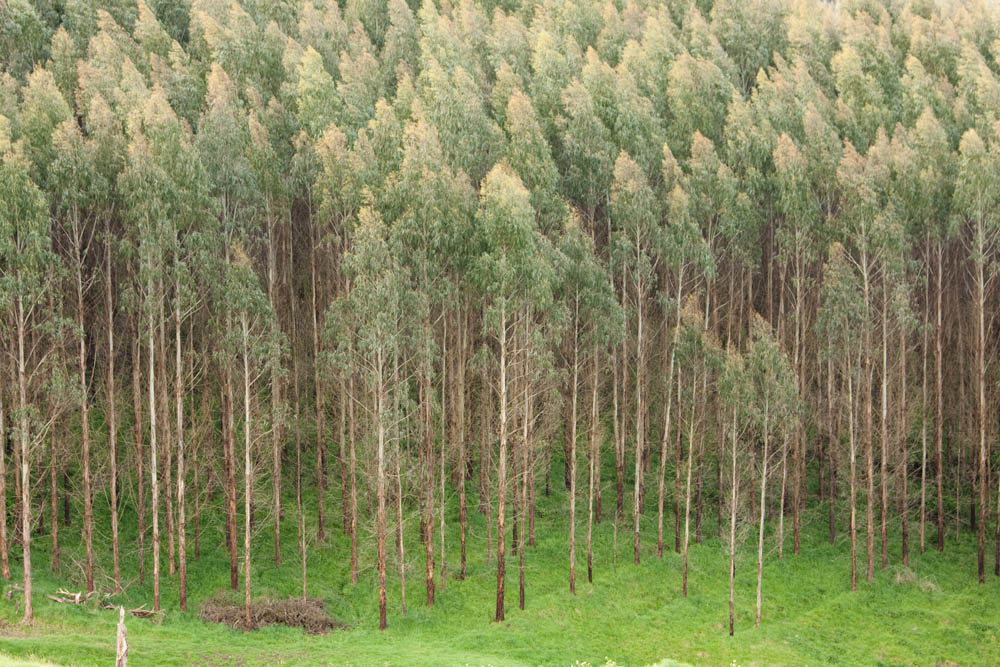
Native forest and commercial plantations as
When plantations are harvested for timber, they are replanted as soon as possible. 76 The 2019-20 east-coast bushfires affected both native forests and commercial plantations in NSW and had compounding effects on the industry which are still being felt today. The replanting program that commenced immediately after the fires, peaked and reached its halfway point in 2022-23, with a cumulative 40 million seedlings planted across the affected regions over the last three years. 77
NSW Native Forest Types
- Acacia
- Callitris
- Casuarina
- Eucalypt
- Mangrove
- Melaleuca
- Other native forest
- Rainforest
NSW Forest Area by Forest Type 2022-23
- Cypress Forests
- Northern Coastal Hardwoods
- Northern Hardwood Plantations
- Northern Tablelands Hardwoods
- Red Gum Forests
- South Coast Hardwoods
- Southern Tablelands Hardwoods
- Northern Softwoods Region
- Snowy Region
Log production
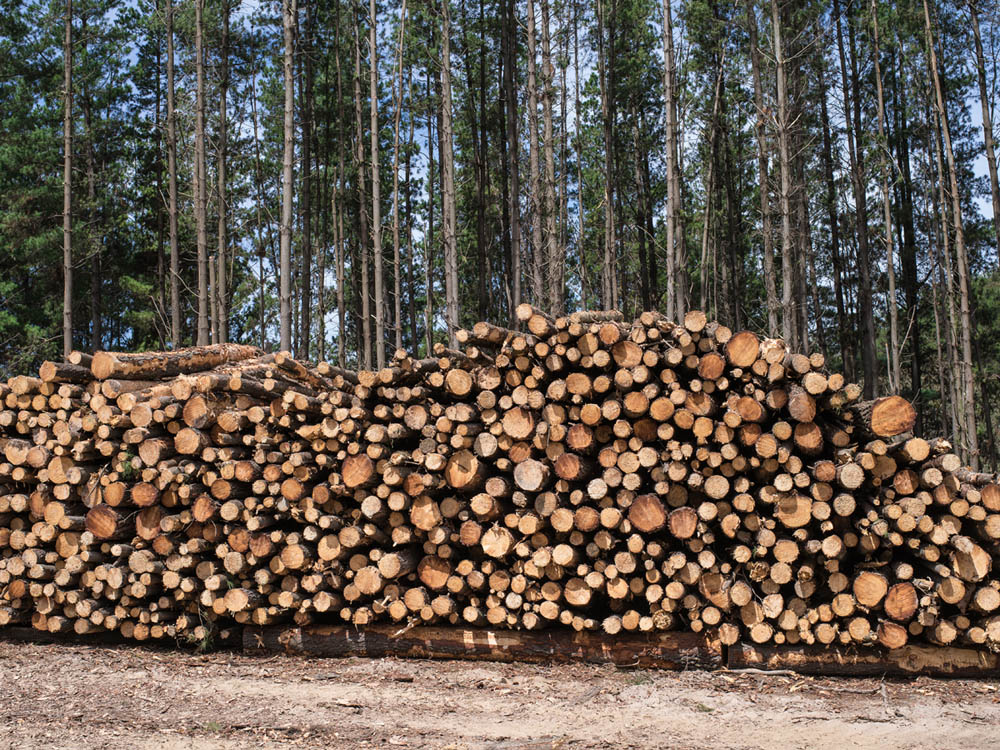
Hardwood production was up slightly to 840 thousand cubic metres. 7 This slight increase was driven by log production from hardwood native forests which increased 6% year-on-year. Log production from hardwood plantations fell 13% year-on-year. Hardwood production mainly consisted of sawlogs (483 thousand cubic metres harvested) and woodchip pulplogs (320 thousand cubic metres harvested). 7 Other minor hardwood products were steady year-on-year at 37 thousand cubic metres.
Price
Australian Log Price Indexes by Log Type
- Hardwood Native saw and veneer logs
- Hardwood Native pulplogs
- Hardwood Plantation saw and veneer logs
- Hardwood Plantation pulplogs
- Softwood Plantation saw and veneer logs
- Softwood Plantation pulplogs
Trade and macroeconomic conditions
The following trade and macroeconomic commentary analyses 2023-24 industry data.
The timber market relies heavily on the housing and construction sector as a key source of demand and recent data has shown that there is a linear relationship between housing completion and sales of timber products 75 Whilst demand for housing rose during 2023-24 (driven by a housing supply shortage), worsening housing affordability (driven rising interest rates in 2023 and high construction and land costs), meant that residential construction rates reduced, resulting in decreased demand for timber.
In May 2023, China announced that they would lift its ban on Australian softwood log imports. The ban, which was implemented in 2020, resulted in a collapse of Australian timber exports, with the total value of annual shipments from NSW falling by 76% since 2019-20. Whilst exports of softwood logs to other key markets such as India and Taiwan have significantly increased in value over the past few years, the loss of the highly valuable Chinese market had a significant impact on the total value of NSW forestry exports. Australian trade resumed in earnest during July 2023, with more than 180,916 cubic metres of log exports left Australian ports for China during 2023-24. 79 However, whilst these quantities are a step forward, they are nowhere near the peak, with China taking 4,359,000 cubic metres of Australian softwood logs in 2017-18. 79
NSW Forestry Exports by Country
Employment and value added
Estimates of industry value added in 2022-23 increased 17% year on year to $3.9 billion for NSW. Industry value added for Australia reached $11.3 billion, with significant gains for log sawmilling and timber dressing (up 11% to $1.8 billion) and other wood product manufacturing (up 24% to $5 billion).
DPIRD Initiatives in Focus
Monitoring regional koala occupancy in north-east New South Wales forests
DPIRD scientists have used passive acoustics and semi-automated call recognition technologies to monitor koala occupancy trends in public forests in north-east NSW over a 7-year period. The study examined the impact of major disturbances and climate extremes, with koala occupancy found to be stable over the study period in these forest regions.
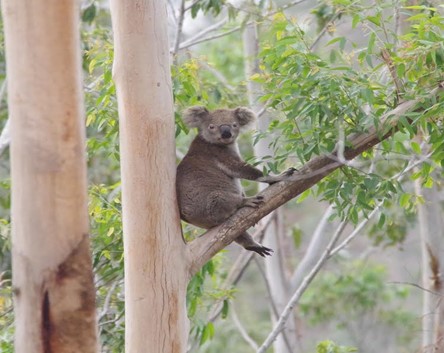
The study period overlapped with a severe drought and the black summer fires in 2019 followed by two years of extreme high rainfall. Forest wildlife can be difficult to detect and monitor, but new acoustic recording methods allow for efficient detection of many species. Species call recognisers have been developed by DPI Forest Science using artificial intelligence (AI) to scan recordings for iconic and vocal forest species including the koala.
Koalas had a stable trend in occupancy over the seven years of monitoring. Although severe and extensive fires led to local declines in koala numbers, this did not translate into a decline in occupancy when considered at the broad regional level. While habitat clearing, cars and roads, dogs, disease and severe fire are well-known threats to the koala, this research indicates that timber harvesting as practised under the comprehensive rulesets applying in the native forests of north-east NSW, is not. More frequent severe wildfires with climate change are likely to be the greatest threat to koalas in these hinterland forests.
A previous study found that regulated timber harvesting had no significant impact on koala density. Timber harvesting in NSW is undertaken under regulations that aim to achieve ecological sustainability by mitigating impacts to the environment. One key practice is excluding harvesting from 50-60% of the State Forest landscape. This provides a mosaic of forest with different age classes that provides habitat and refuges for biodiversity after harvest, especially while the forest regenerates. Additional browse trees for koalas are also retained in harvest areas where a koala habitat map identifies suitable areas, which has increased the level of protection for koalas compared to past practices.
These findings in no way suggest that concerns about the status of the koala in the wild are unfounded, or that they are not now absent, rare or declining in some areas. Rather, it is important to acknowledge and respond to the very real threats that koalas suffer in different parts of their range
Ongoing monitoring is crucial for tracking future changes, especially with predictions of more frequent, severe forest fires due to climate change. In a companion study, GPS tracking of koalas revealed they maintained stable home ranges after timber harvesting, using both young regenerating forest and mature forest in timber harvest exclusion areas.
The full paper can be found here.


