

Early indications are for an improved year, with some global climate models forecasting another La Nina to develop over summer. Current forecasts are for 750,000 tonnes, however additional rain is needed to realise this forecast.


cropping
Sorghum
- GVP $241 million est. Down 14% year-on-year.
- Average prices rose slightly, with increased global coarse grain supplies limiting any upside.
- China accounted for nearly 90% of the sorghum exports.
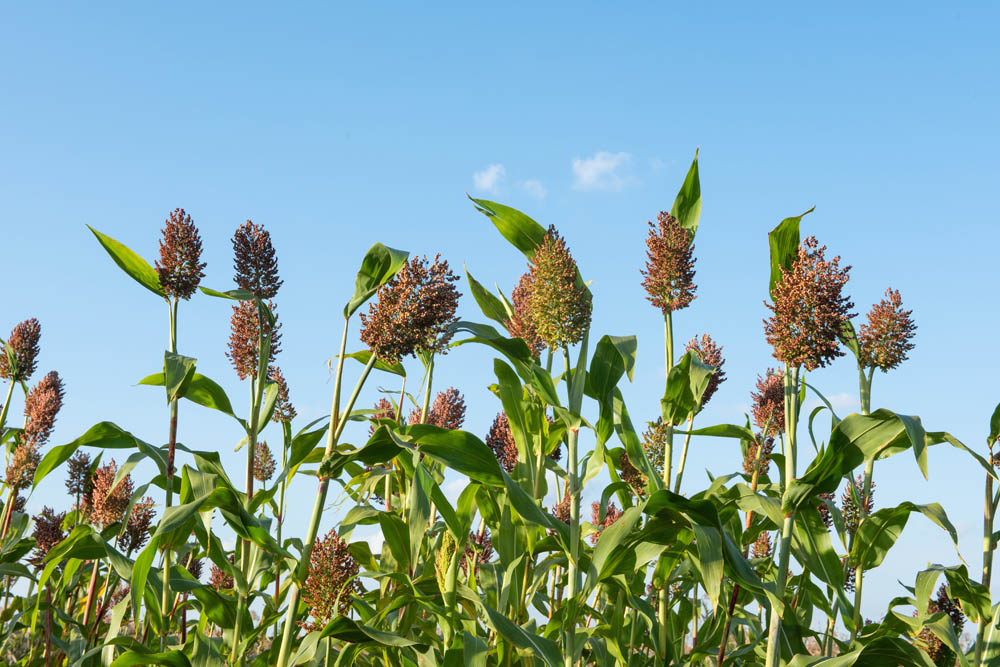
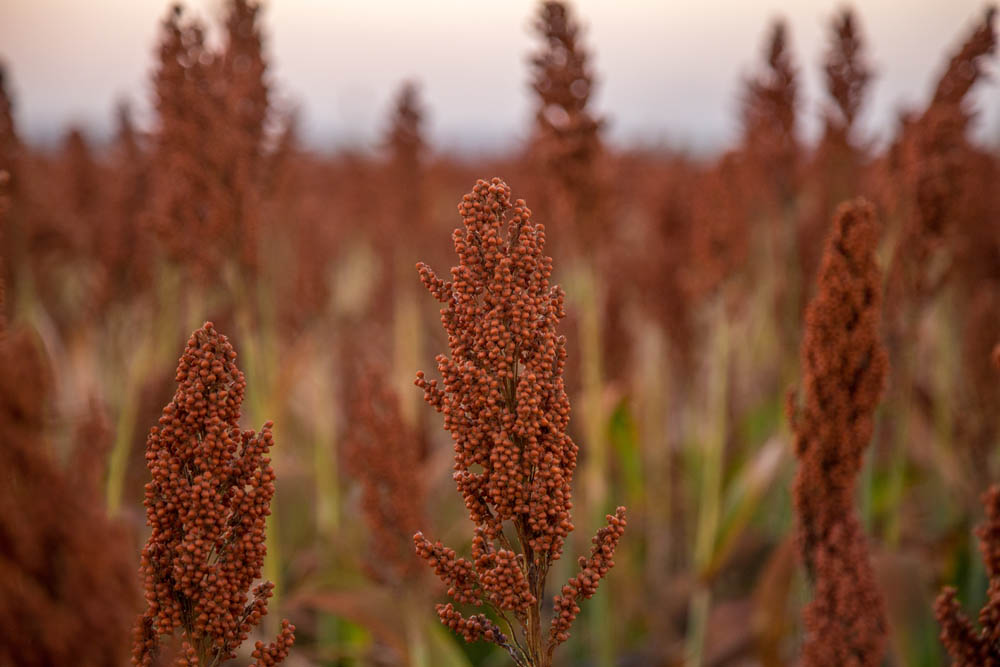
Sorghum production was down on the previous year, though rain late in 2023 allowed farmers to plant additional sorghum late in the window. This raised production to 710,000 tonnes when early season forecasts were as low as 448,000 tonnes. Sorghum prices were down slightly on year-ago levels as improved US production allowed for higher exports into China. The US and Australia are the major exporters of sorghum to China.
Production
Sorghum Production and Area
- Area ('000 ha)
- Production ('000 tonnes)
NSW sorghum production was estimated to be 710,000 tonnes in 2023-24, a 13% fall compared to the previous year. It was the lowest level since 2020-21, hampered by dry conditions in winter and spring 2023. Australian production was 16% lower to 2.2 million tonnes.
Dry conditions early in the summer cropping season put early season estimates well below year-ago levels. ABARES initial forecasts were 448,000 tonnes in September 2023, the lowest since the 2018-2020 drought and below the 5 year average. Dry conditions early in the growing season reduced this forecast lower, down to 403,000 tonnes in December 2023.
Late plantings were spurred by rain in December, which spread across Queensland into northern NSW. Summer storms helped growing conditions in key regions like Gunnedah and Moree, raising late season forecasts to 710,000 tonnes. In March 2024, moisture coming from the system ex Tropical Cyclone Megan provided an ideal finish for crops, although repeated fronts at the end of the season over April led to an extended harvest.
Price
Sorghum prices averaged $400/tonne over 2023-24, a slight increase over the year. Prices were strong early in the financial year, continuing the strength in grain markets in 2023, before easing in early 2024 as harvest commenced. Summer storms across NSW and Queensland in late 2023 spurred planting in northern NSW and drove prices lower in response to the larger expected crop.
110
Sorghum was priced attractively in early 2024 for local feed buyers.
The US was drought affected in 2022-23, with sorghum exports falling to a decade low of 2.77 million tonnes. This is reflected in the divergence in Australian and US sorghum prices in 2022-23. As US exports recovered in 2023-24, US sorghum prices converged back in line with Australian sorghum.
Sorghum - World Sorghum Prices
- US Sorghum (Gulf)
- Local Prices
Trade and Macroeconomic Conditions
Sorghum - World Production and Exports
NSW sorghum exports were approximately $200 million in 2023-24, down around 50% on the previous year. Australian sorghum exports were approximately $900 million, with a similar drop in value. China was again the major export destination for Australian sorghum, taking nearly 90% of the total exports. Japan and Taiwan were the next largest export markets, at $64 million and $19 million respectively. For NSW, 99% of sorghum exports go to China, with a value of $177 million in 2023-24.
Sorghum is a popular grain worldwide, although most major producers have high domestic consumption of the grain. Australia was the 9th largest producer but it is the 2nd largest exporter, behind only the USA. Argentina is the only other sizable exporter. China accounts for the vast majority of imports globally, estimated at 7.7 million tonnes in 2023-24.
The United States returned to position as the largest sorghum producer after the drought in 2022-23, when production fell to a decade low of 4.77 million tonnes. US production in 2023-24 recovered to 7.74 million tonnes with better seasonal conditions in key producing states Kansas and Texas. US exports have recovered in turn, back to 5.59 million tonnes.
DPIRD Initiatives in Focus
Developing NIRS calibrations to screen for methane production
A Near Infrared Reflectance Spectroscopy (NIRS) calibration that quickly and affordably predicts the fermentability and methane production potential of various pastures to assist grazing research and plant breeding programs to identify low methane pastures and species.
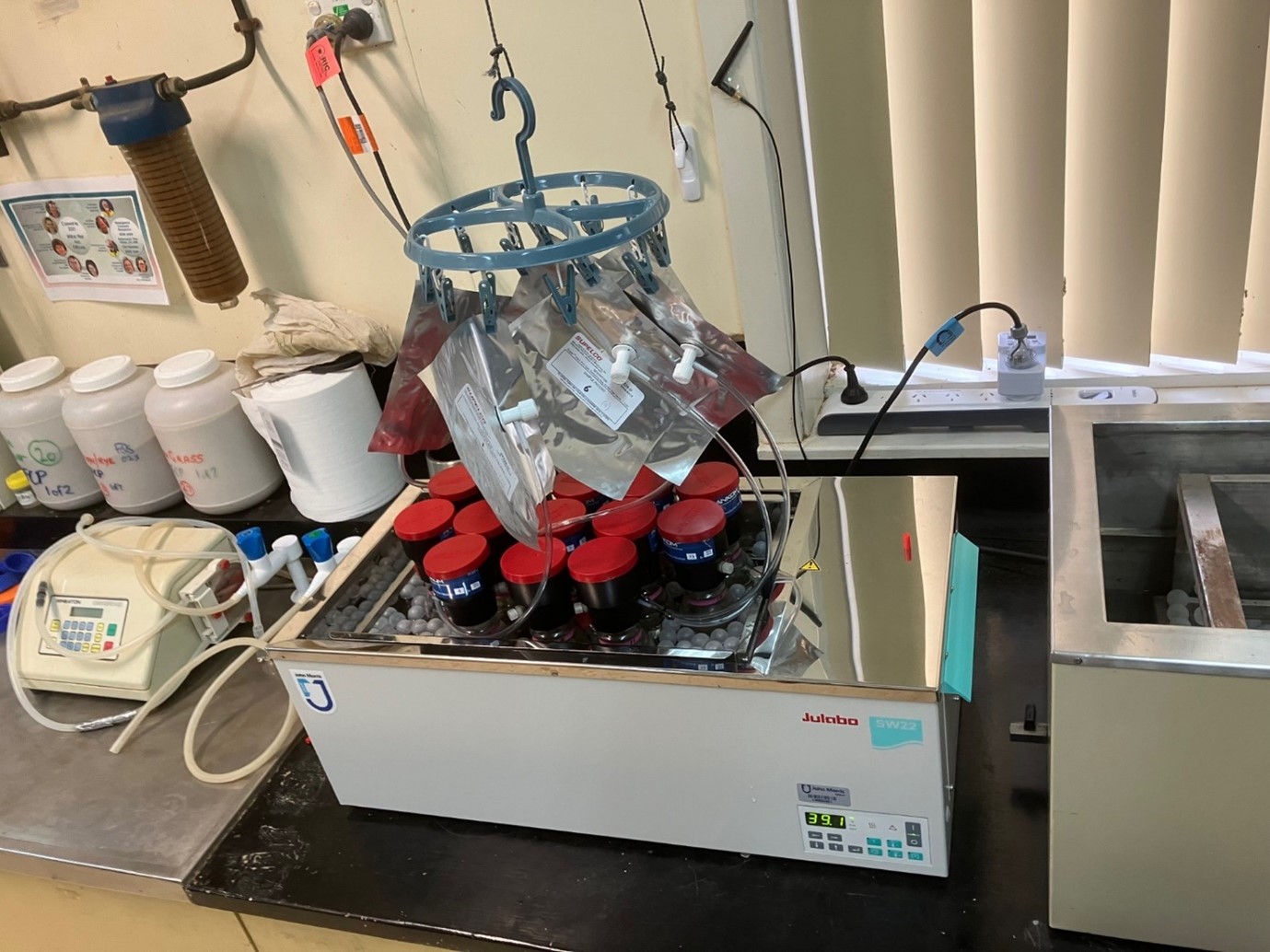
The project's goal is to create and commercialise a Near Infrared Reflectance Spectroscopy (NIRS) calibration that can quickly and affordably predict the fermentability and methane production potential of various legumes, grasses, and mixed swards. By achieving this, the project aims to benefit the industry in several ways.
Enable plant breeders and researchers to identify low methane species, varieties, and farming practices suitable for different environments and forage breeding programs. Facilitate rapid assessment of feedbase methane production and provide additional data for grazing study research.
Compare the methane efficiency of different grazing systems when used in conjunction with live weight, intake, and methane output data. Serve as a cost-effective tool for comparing and selecting species and accession early in forage breeding programs, instead of evaluating methanogenic potential at a later stage
Disseminate information to suppliers, allowing producers to choose pasture species with higher antimethanogenic properties, thereby reducing their carbon footprint while maintaining productivity and profit.
Through this collaboration with NSW DPIRD and Meat & Livestock Australia, the project seeks to offer sheep and cattle producers the option to grow pasture species that result in lower enteric methane emissions, ultimately increasing their farm's productivity.
For more information click here.


