



Fisheries
- GVP $204 million est. Down 0.5% year-on-year.
- Aquaculture production in NSW eased slightly to $112.1 million in 2023-24.
- NSW fisheries exports fell back to $46.6 million in 2023-24.
Wild Harvest Production
Over the long term wild caught fishing has been evenly split between crustaceans and finfish. Sea Mullet has historically been the major finfish catch by value in NSW, followed by Bream (Black and Yellowfin Bream), Whiting and Australian Salmon. Blacklip Abalone is the main wild caught mollusc by value, accounting for nearly half of total wild caught molluscs.
Fisheries - Wild Caught Production
- Crustaceans
- Molluscs
- Finfish
Aquaculture Production
Production of Black Tiger Prawns was down significantly in 2022-23 following the outbreak of White spot syndrome virus, identified on 3 prawn farms in the Clarence River in early 2023 55 . The value of prawns was $4.6 million in 2022-23, with 212.2 tonnes produced. By value, this was down 66% on the 2021-22 value of $13.7 million. There is a control order for the Clarence River zone to manage the outbreak and minimise risks of spread to other parts of NSW.
The value of freshwater fish production was slightly lower in 2022-23, with lower production across all major species. Murray cod production was 602.25 tonnes, down 16%. Lower production of freshwater fish was offset by higher prices for each of the major species. Murray cod increased from $20.54/kg in 2021-22 to $23.50/kg in 2022-23. Total freshwater fish fell 8% to $19.1 million in 2022-23.
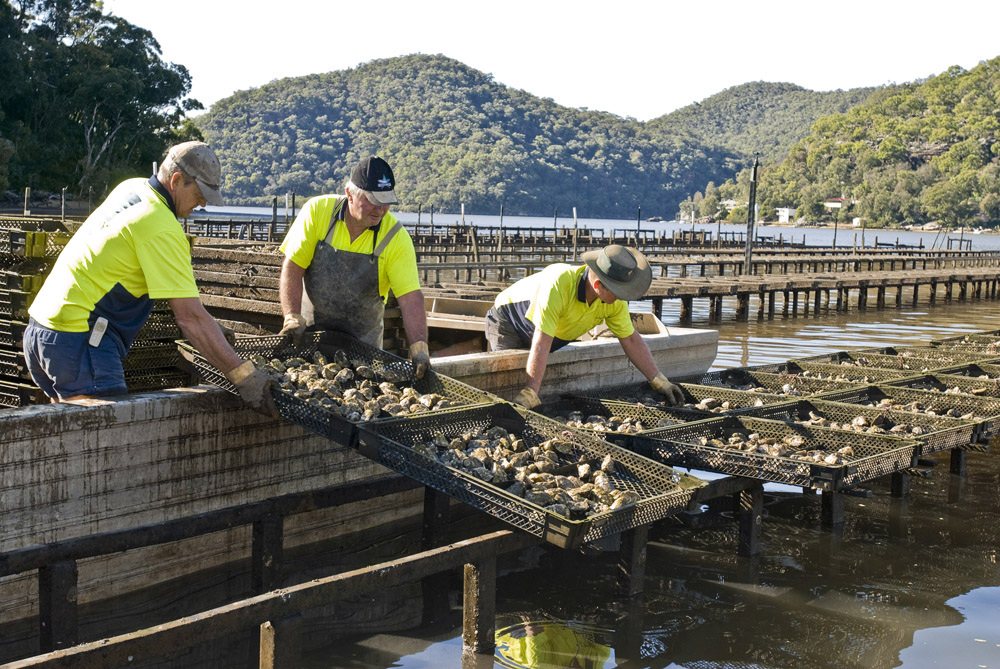
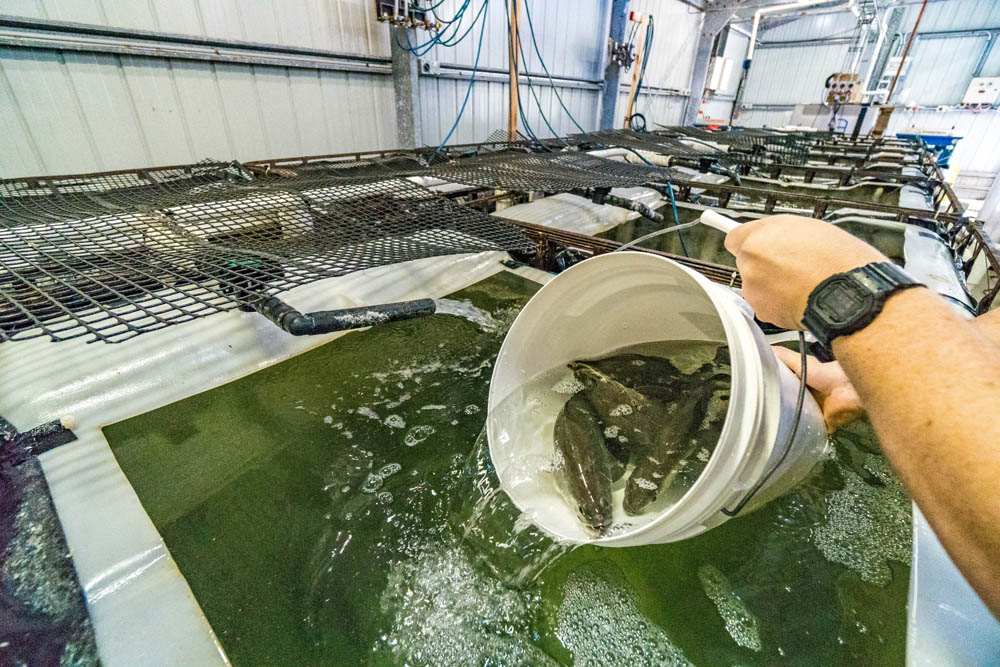
The oyster industry increased their share to 73% of total NSW aquaculture production value. There was a noticeable trend in several estuaries to produce Pacific Oysters as a risk management strategy. Only two estuaries dropped in production output during this period due to natural disasters and water quality impacts. There were noticeable increases in land-based production of Trout and Moreton Bay Bugs in 2023/24.
In September 2024, NSW launched the NSW Aquaculture Vision Statement, with a goal to grow the NSW aquaculture industry to $300 million by 2030. 59 Part of the vision includes initiatives to open up new areas for marine aquaculture.
Trade
NSW fisheries exports to China were 60% lower, down to $11.6 million, but China was still the largest market. The fall came entirely from lower sales of Atlantic salmon, which were likely sourced from Tasmania. The United States was the second largest export market, rising 10% to $10.6 million. Atlantic salmon was the highest value product exported, at 14.9 million, followed by southern bluefin tuna ($13.2 million) and yellowfin tuna ($2.3 million).
Australian fisheries exports were slightly higher, up 2.4% to $1.34 billion in 2023-24. Despite a small decline, China was the largest export market for Australian fisheries. However, exports to Hong Kong increased significantly. This may indicate that Australian seafood was finding alternative channels into the Chinese market in 2023-24. When combined, Australian exports to China and Hong Kong were up 5%. Atlantic salmon was the major fisheries export to China, with a value of $209 million in 2023-24. Most of these exports were from Tasmania and Victoria, with a small amount shipped from NSW. Over the past 3 years Atlantic salmon exports to China averaged over $200 million, compared to $85 million in the 3 years prior. Chinese tariffs on salmon were eliminated in 2019 as a result of the China-Australia Free Trade Agreement, along with tariffs on all Australian seafood.
Australia is likely to resume rock lobster exports to China following the end of sanctions on the commodity. 11 Rock lobsters found a foothold in the Hong Kong market, with exports rising to $237 million in 2023-24.


