
Primefact 1473, Second edition, May 2026
Tropical nut borer (Hypothenemus obscurus) is an exotic plant pest not present in Australia. This beetle is a major threat to Australia’s macadamia industry.
The beetle can damage all parts of the macadamia fruit – husks, shells and nuts, while feeding on the nuts. It is one of the most destructive and persistent pests of macadamias. The borers live and feed beneath the husk making it difficult to spray for them. Tropical nut borers in Hawaii have been responsible for damaging up to 60% percent of the crop in heavily infested areas. Up to 190 beetles have been found in a single infested nut.
Notifiable status
If you suspect Tropical nut borer (Hypothenemus obscurus):
- Call the Exotic Plant Pest Hotline 1800 084 881
- Email biosecurity@dpird.nsw.gov.au with a clear photo and your contact details
- Complete an online form
 Description
Tropical nut borers are small, dark brown beetles. Adults are only 1.5 mm long (Figure 1) with up to 190 beetles found in a single macadamia.
Damage
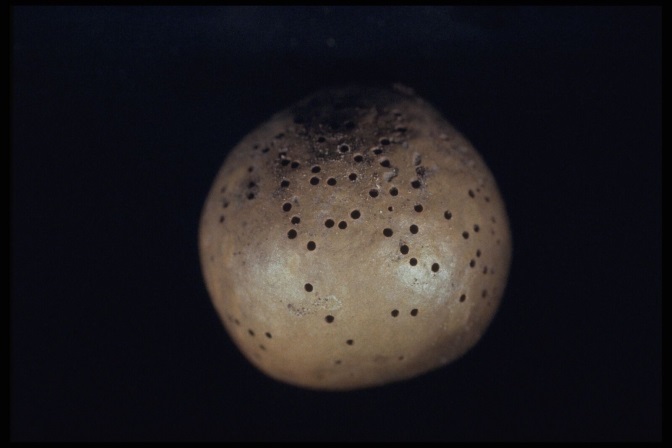
Tropical nut borers bore 0.5 mm holes into macadamia husks and tunnel through the husk, shell and kernel.
Tropical nut borers feed on the macadamia nuts. Multiple borer holes often make the nuts unmarketable or cause complete nut loss (Figure 2). The extensive tunnels can also cause the nuts to spoil through secondary fungal infections (Figure 3).

Lifecycle
Adult borers attack nuts that remain on the tree and the ground. Females bore galleries within the shell and nut in which they lay up to 120 eggs.
Larval, pupal and adult life stages are all completed within the infested nut. Tropical nut borers undergo two larval instars within the nuts, and the adults may either remain within a single nut to mate and oviposit or disperse to infest new sites.
Mature beetles only exit the infested nuts due to overcrowding, food depletion or infection by secondary diseases.
Host range
Recorded hosts of tropical nut borer include Brazil nut (Bertholletia excelsa), cocoa (Theobroma cacao), coffee (Coffea spp.), eucalypts (Eucalyptus spp.), Indian tamarind (Tamarindus indica), macadamia (Macadamia integrifolia, M. tetraphylla), nutmeg (Myristica fragrans) and pines (Pinus spp.).
Spread
Tropical nut borer adults spread locally by flying.
Long distance spread occurs with transport of infested macadamia nut in shell.
Distribution
Tropical nut borer is widespread in North America (including Hawaii), Canada, Central and South America.
Actions to minimise risk
Put in place biosecurity best practice actions to prevent entry, establishment and spread of pests and diseases:
- practice “Come clean, Go clean”
- ensure all staff and visitors are instructed in and adhere to your business management hygiene requirements
- monitor your orchard regularly
- keep records