
Polyphagous shot‑hole borer (Euwallacea fornicatus) is a serious invasive beetle that threatens a wide range of tree species. First detected in Australia in 2021 in Perth, PSHB has since established across multiple suburbs in the Perth metropolitan area. It has not been detected in New South Wales.
PSHB bores into trunks and branches, causing dieback and potentially killing trees. The beetle also carries a symbiotic Fusarium fungus, which further disrupts a tree’s vascular system and accelerates decline.
Western Australia transitioned from eradication to long‑term management of PSHB in June 2025.

PSHB and NSW
NSW remains free of PSHB. To protect the state, the Biosecurity (Polyphagous shot-hole borer) Control Order 2023 regulates the movement of materials that could carry the pest. PSHB carriers can only enter NSW if they meet the specific entry conditions outlined in the Order.
Click here for NSW market access advice for PSHB hosts and carriers.
Reporting
If you suspect polyphagous shot hole borer (Euwallacea fornicatus):
- Call the Exotic Plant Pest Hotline 1800 084 881
- Email biosecurity@dpi.nsw.gov.au with a clear photo and your contact details
- Complete an online form
Description
The adult beetle is very small, 1.5 to 2.5 mm long, and black (Figure 2).
The beetle bores about 1–4 cm into the tree; the exit hole is very small (<1 mm diam.); with many exit holes in an infested tree (Figure 3).
The larvae are small, white, legless and “C” shaped (Figure 4).


Host trees
Polyphagous shot hole borer attacks a wide range of hardwood trees, including species within Acacia, Acer, Brachychiton, Casuarina, Liquidambar, Magnolia, Persea, Platanus, Populus, Quercus, Cupaniopsis, Salix, Ficus, Camellia, Fagus, Albizia, Corymbia, Alnus.
Damage
The beetle (Euwallacea fornicatus) inoculates the fusarium dieback fungus (Fusarium euwallaceae) into the tree. The larvae of the beetles feed on the fungus within beetle galleries. The fungus destroys the food and water conducting system in the tree, leading to stress and dieback, and death in severe cases.
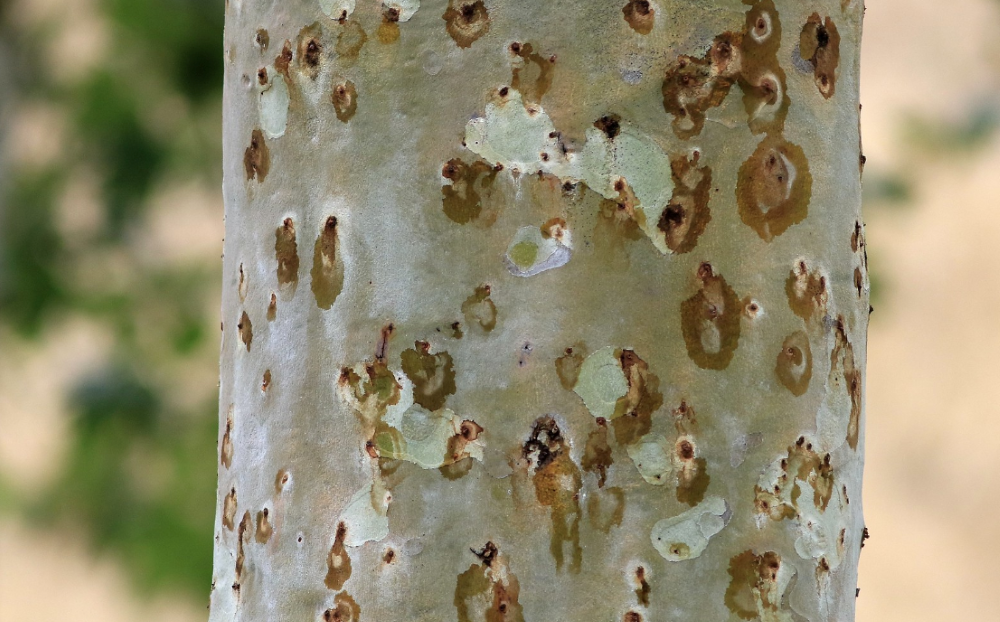
Symptoms of infection include water-soaked lesions surrounding exit holes in the bark, which are often surrounded by a white powdery exudate (borer frass) (Figure 4).
Sometimes frass tubes (which resemble small matchsticks extending from the hole) can be seen (Figure 5).
Examination under the bark and in the wood reveals beetle galleries and brown to black discolouration caused by the fungus.
Affected trees might show signs of wilting and have dead branches. In severe cases the whole tree dies.

Spread
Polyphagous shot hole borers may be introduced to Australia as eggs, larvae or adults concealed within raw timber materials. This could include whole plant parts, timber for construction, timber packaging, wood chips or any other material produced from host trees.
Distribution
Euwallacea fornicatus is native to Asia; it has been introduced to the USA, South Africa and Israel.
Lifecycle
Adult females disperse during the day and attack hosts within 30–35 m, but can travel up to 400 m. They bore into the branch or trunk. Eggs are then laid and take up to 1 month to develop into adults. Mating takes place within the galleries, then females disperse to new hosts.
Actions to minimise
Put in place biosecurity best practice actions to prevent entry, establishment and spread of pests and diseases:
- practice “Come clean, Go clean”
- ensure all staff and visitors are instructed in and adhere to your business management hygiene requirements
- monitor your crops regularly
- monitor and control weeds that can harbour the pest
- source plant material of a known high health status from reputable suppliers
- keep records