
Discover the ecology
Ecology is the science of how living things interact with each other and their environment. These interactions are shaped by the variety of habitats in an area and how plants and animals use these habitats.
Marine habitats provide food, shelter and a place to grow and reproduce for marine plants, animals, algae, fungi, and microorganisms.
Marine habitats along the northern NSW coastline include open water, rocky reef, and soft sediments such as sand. Marine habitats (rock and sand) can be changed by marine plants (e.g. seagrass) and algae, or particular animals (e.g. corals, sponges and shellfish) that grow in or on the substratum and create new habitats for other plants and animals.
These are called habitat-forming species or ecosystem engineers.

Cook Island marine habitats
Cook Island originates from lava flows from the Mount Warning Shield Volcano approximately 20 million years ago. This hard-wearing volcanic rock forms complex reefs around Cook Island that include a mosaic of boulders, ledges and caves, and provide a variety of solid surfaces for marine life to attach.
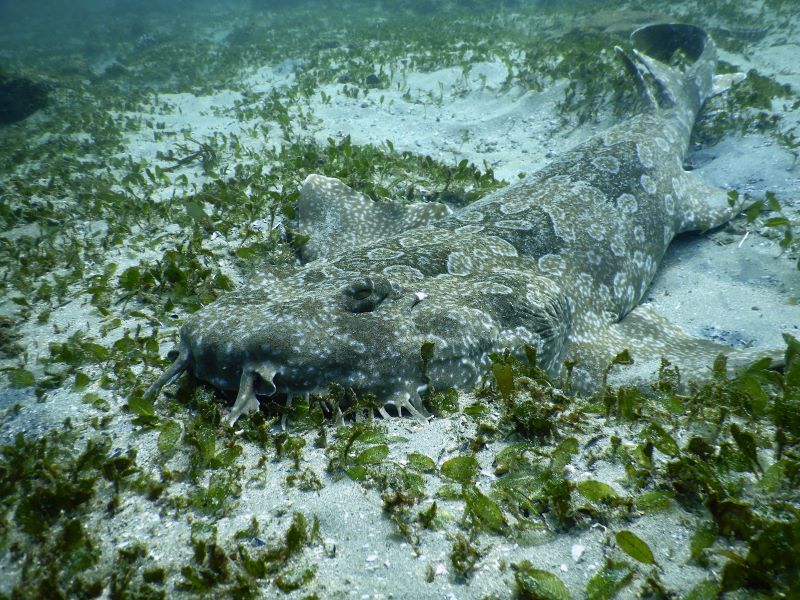
Diving deeper, the rocky reef surrounding the island gives way to sandy seafloor.
Cook Island Aquatic Reserve is located within a distinct climate zone, where tropical and temperate habitat-forming species live side by side. Consequently, the different marine habitats within the reserve support a high diversity of marine life.
The variety of marine habitats within Cook Island Aquatic Reserve include:
- rocky intertidal habitat (e.g. boulder fields and rock platforms)
- subtidal habitats
- rocky reef – bedrock, caves and boulder fields
- habitat-forming invertebrate communities growing on the rocks:
- hard and soft corals and anemones – coral garden
- sponge and sea squirt garden
- turf and encrusting algae
- green, brown and red macroalgae
- habitat-forming invertebrate communities growing on the rocks:
- sand flats
- bare sand and rubble
- seagrass and algae
- open water
- rocky reef – bedrock, caves and boulder fields
Subtidal habitat
Cook Island Aquatic Reserve hosts a diverse range of subtidal habitats. These habitats are influenced by depth, light, wave exposure, water currents, water quality and the complex interactions among marine life using these areas.
The direction of waves and currents varies through days and seasons, but generally the areas to the:
- east and southeast of the island are exposed to harsher oceanic conditions including strong currents and prevailing wave action
- north, west and southwest are sheltered by the island.
Fragile species like seagrasses and soft corals are found in the calmer, sheltered areas of the reserve. The extent of these species fluctuates through time due to the prevailing conditions.
Changes in water quality can influence the growth and health of marine life. Sediments and nutrients from the Tweed River and other coastal creeks influence the waters of the aquatic reserve, particularly after floods.
Droppings from migratory birds that gather on Cook Island to breed, rich in nutrients like nitrogen and phosphorus, wash into the aquatic reserve and fuel marine productivity.
Cook Island is home to a wide range of corals, anemones, sponges, sea squirts and algae. These communities are typically mixed throughout the aquatic reserve, but in some areas one type dominates.
The shallow rocky reef is dominated by turfing and encrusting coralline algae. Beyond this, coral gardens, sponge and sea squirt gardens and a variety of algae become more abundant.
Sand flats extend out from the rocky reef. In the lee of the island, some sand flats are colonised by seagrass beds, or mixed seagrass and macroalgae beds