

NSW DPI canker management exercise: December 2018
Rebekah Pierce, December 2018
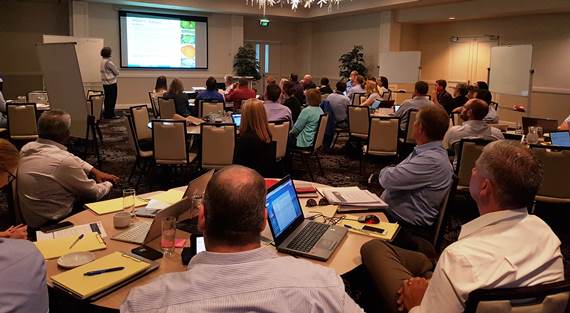
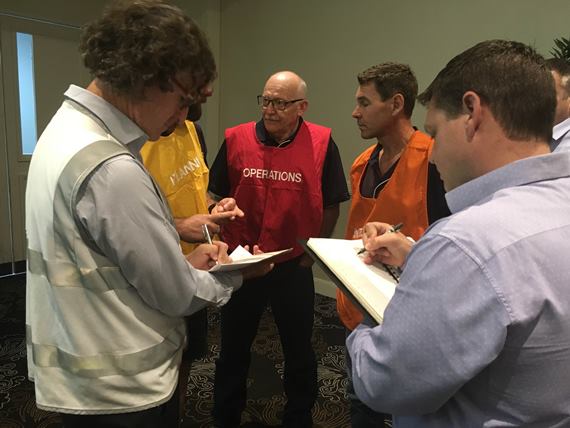
Exercise Orange Juice was held in Griffith on the 26th of October 2018 with the aim of testing NSW’s ability to respond to a simulated outbreak of citrus canker.
The exercise featured strong representation from industry, state and federal governments and was organised by NSW DPI in conjunction with Local Land Services.
Exercise Orange Juice was a timely examination of NSW’s capacity to respond to a citrus canker incursion. Citrus canker has never been detected in NSW but a nationally coordinated eradication effort is underway in the Northern Territory and Western Australia.
This makes it vital for NSW to test its capacity and identify areas for improvement.
The exercise scenario was hypothetical and encouraged discussion focusing on preparation and response. Participants showed great enthusiasm when brainstorming processes and actions that will help ensure an effective response should citrus canker ever be detected in NSW.
The one day exercise involved representatives from NSW Department of Primary Industries, Local Land Services, Plant Health Australia, Citrus Australia, Nursery and Garden Industry Australia and NSW Farmers.
The exercise is currently being reviewed with an exercise report and recommendations due by the end of the year.
Play your part

Residents and growers are being asked to play their part in keeping NSW free of citrus canker by inspecting for signs of the disease.
The source of the most recent citrus canker incursion in NT and WA is still uncertain and may never be resolved.
As a precaution, the public of the Northern Territory and Western Australia have been strongly encouraged to inspect citrus plants purchased in the last two years.
New South Wales residents and growers are being urged to keep NSW free of citrus canker by inspecting trees and reporting suspicious symptoms.
Citrus canker is a highly contagious disease that severely impacts fruit quality and yield. Should it become established, the disease would have devastating implications for the citrus industry and our access to vital export markets.
The symptoms of citrus canker include blister-like lesions on the leaves surrounded by an oily, water-soaked margin with a yellow ring around the lesion. Premature fruit can drop early followed by defoliation, twig dieback and general tree decline. In severe cases, it can lead to tree death. More information on identifying the disease can be found in the DPI Primefact.
Growers and communities of NSW have an essential role in the surveillance and reporting of any suspected citrus canker in their citrus trees. Early detection of exotic pests provides the best chance of eradication with minimal impact to growers, communities and the state.
If you suspect citrus canker, do not move suspect plants or material. Report the suspected plant immediately to the Exotic Plant Pest Hotline on 1800 084 881.
Keeping growers across our national program to stop citrus canker
The Commonwealth Government and others involved in the citrus canker response have set up a newsletter to provide more detail about how we are tracking in the eradication effort.
Join the mailing list to receive regular updates at citrus-canker@agriculture.gov.au
For information about the handling of personal data and information view the Commonwealth Department of Agriculture and Water Resources’ privacy policy atwww.agriculture.gov.au
http://www.outbreak.gov.au/current-responses-to-outbreaks/citrus-canker
