
Stop the rot…
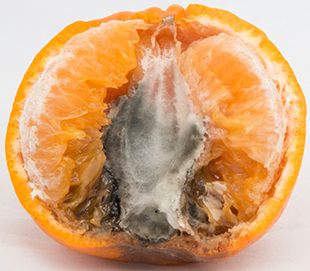
Black core rot caused significant damage to the southern Imperial mandarin crop during the 2016 season. A major problem was that not all infected fruit had symptoms at harvest. The fungus then grew during transit, and infection was discovered at markets or on the kitchen bench.
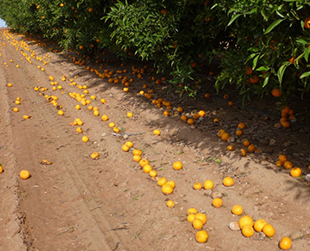
Even during the early stages of infection, black core rot causes significant off-flavours, and the black fragments ruin the appearance of the juice. Fruit fall is another symptom (pictured).
Samples were sent to the NSW DPIRD Plant Health Diagnostic Service, where Citrus Pathologist, Nerida Donovan, identified the Alternaria sp. fungus in affected fruit. Infection was sporadic, with not all blocks affected and differences in infection throughout blocks.
The rot starts in the stylar (navel) end of fruit, with the fungus entering either during early fruit development (i.e. from petal fall) or through imperfections or micro-cracks.
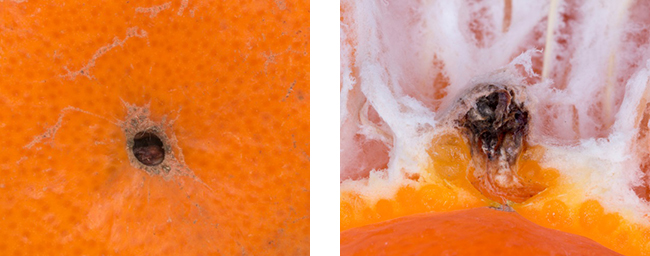
Diseased fruit colour prematurely and a brown to black discolouration might be evident at the stylar end of affected fruit (pictured stylar external and cut view).
Mealybug infestations can exacerbate issues with black core rot. Once the infection has established, it is too late to spray.
The disease is common, but the level of infection differs with the season. It is difficult to predict whether the high incidence experienced this year will continue into the coming years. The current management practice is to delay harvest to let infected fruit fall from the tree.
Imperial mandarins in Queensland did not seem to be affected, but it is likely that their existing spray program to manage other fungal diseases also reduced the level of core rot.
Current literature suggests that a protective copper spray program is ineffective for black core rot.
Well-pruned trees have the advantage of better spray penetration and reducing levels of dead wood that could harbour the causal fungus can also help.