

Round-leafed cassia
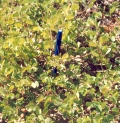
Round-leafed cassia
(High-resolution
image available)
NOTE: The information in this Agnote must be read in conjunction with Introduction to selecting and using
pastures in NSW, which covers information on areas of adaptation, sources of variability, species mixtures, and important issues
related to animal health and the conservation of native vegetation.
| Pasture type and use | Short-lived perennial tropical legume, growing in the warm season. Main production is in summer. Grazing, but has been used for hay and silage. |
|---|---|
| Area of adaptation | Far North Coast, North West Slopes. |
| Min. average annual rainfall | Far North Coast: 800–1000 mm. North West Slopes: 650–700 mm. |
| Advantages |
|
| Disadvantages |
|
| Soil requirements | Light-textured well-drained soils. Not suited to hard-setting soils. |
| Varieties | Wynn |
| Sowing rates: |
|
| Sowing time | A high level of hard seed allows sowing between September and early March. |
| Companion species | Compatible in mixtures with adapted species. |
| Inoculation | Group M |
| Major nutrient deficiencies | Phosphorus, potassium, sulfur and molybdenum. |
| Main insect pests | Relatively free from pests. |
| Main diseases | Relatively free from disease. |
| Management | In first season, allow seed-set for future plant recruitment, as plants die after about 16–18 months. Hard short-duration grazing suits Wynn. Do not allow selective continuous heavy grazing, which can lead to Wynn cassia dominance. |
| Livestock disorders of particular note | Some cassia spp. (e.g. C. obtusifolia and C. occidentalis) have been associated with poisoning in ruminants and horses — both leaves and seeds were toxic, and muscle damage was the main effect. So far there have been no problems reported for C. rotundifolia. |
| Additional tips |
|
| Further information | Agnote 1-102 Wynn round-leafed cassia. |
Acknowledgments
Advice on livestock health disorders was provided by Dr Chris Bourke, Principal Research Scientist, NSW Agriculture, Orange. His contribution is gratefully acknowledged.
Photo: Warren McDonald, Former Technical Specialist (Pastures), NSW Agriculture, Tamworth
