

Forest bluegrass
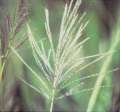
Forest bluegrass
(High-resolution
image available)
NOTE: The information in this Agnote must be read in conjunction with Introduction to selecting and using pastures in NSW, which covers information on areas of adaptation, sources of variability, species mixtures, and important issues related to animal health and the conservation of native vegetation.
| Pasture type and use | Perennial grass producing main growth in spring, summer, autumn. Used primarily for grazing. |
|---|---|
| Area of adaptation | North West Slopes and Plains |
| Min. average annual rainfall | 600 mm (summer rainfall dominant) |
| Advantages |
|
| Disadvantages |
|
| Soil requirements | Very well adapted to a range of soil types. Nutritional deficiencies of phosphorus and sulfur need to be addressed. A persistent legume can provide nitrogen. |
| Varieties | Swann
**
** Denotes that this variety is protected by Plant Breeder’s Rights. |
| Sowing rates |
|
| Sowing time | Mid spring to late summer. |
| Companion species | Subterranean clover, yellow serradella, barrel medic. These need to be maintained to improve grass production and quality. |
| Inoculation | N/A |
| Major nutrient deficiencies | Phosphorus, nitrogen, sulfur. |
| Main insect pests | No significant problems encountered. |
| Main diseases | No significant problems encountered. |
| Management | Avoid rank growth to maintain quality during season. Manage to maintain the companion legume. |
| Livestock disorders of particular note | No disorders encountered. |
| Additional tips | Ensure seed for sowing is free of declared noxious weeds. Recruitment from fallen seed has been observed; stands may thicken over time. |
Acknowledgments
Advice on livestock health disorders was provided by Dr Chris Bourke, Principal Research Scientist, NSW Agriculture, Orange. His contribution is gratefully acknowledged.
Photo: Warren McDonald, Former Technical Specialist (Pastures), NSW Agriculture, Tamworth
