

Digit grass
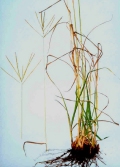
Digit grass
(High-resolution
image available)
NOTE: The information in this Agnote must be read in conjunction with Introduction to selecting and using pastures in NSW, which covers
information on areas of adaptation, sources of variability, species mixtures, and important issues related to animal health and the conservation of native vegetation.
| Pasture type and use | Perennial summer-growing grass. Main production late spring, summer, autumn. Grazing. |
|---|---|
| Area of adaptation | Widely adapted, North West Slopes and Plains, northern half of the Central West Slopes, Central West Plains and Northern Tablelands. |
| Min. average annual rainfall | 400 mm |
| Advantages |
|
| Disadvantages |
|
| Soil requirements | Widely adapted from acid sands to heavy clays. |
| Varieties | Premier |
| Sowing rates: |
|
| Sowing time | Late spring to late summer, depending on district and summer rainfall pattern. |
| Companion species | Medics, sub clover and lucerne. Consol lovegrass, Rhodes grass and Inverell purple pigeon grass. |
| Inoculation | N/A |
| Major nutrient deficiencies | Nitrogen and phosphorus. |
| Main insect pests | No significant problems. |
| Main diseases | Under extreme wet conditions, false smut and leaf rust. |
| Management | Avoid grazing in the first year until seed-set. Rotational grazing is preferred to set stocking. Manage quality by not allowing a build-up of rank material. |
| Livestock disorders of particular note | No problems reported. |
| Additional tips | Seed quality is important; check germination percentages and purchase seed above 50% germination with nil parthenium weed. |
| Further information | Agnote DPI-430 Digit grass — a versatile warm-season grass
|
Acknowledgments
Advice on livestock health disorders was provided by Dr Chris Bourke, Principal Research Scientist, NSW Agriculture, Orange. His contribution is gratefully acknowledged.
Photo: Warren McDonald, Former Technical Specialist (Pastures), NSW Agriculture, Tamworth
