

Bambatsi panic
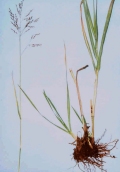
Bambatsi panic
(High-resolution
image available)
NOTE: The information in this Agnote must be read in conjunction with Introduction to selecting and using pastures in NSW, which covers
information on areas of adaptation, sources of variability, species mixtures, and important issues related to animal health and the conservation of native vegetation.
| Pasture type and use | Perennial summer-growing grass. Main production late spring, summer, autumn. Grazing. |
|---|---|
| Area of adaptation | North West Slopes, North West Plains, Central West Plains, Central West Slopes, and irrigation. |
| Min. average annual rainfall | 450 mm |
| Advantages |
|
| Disadvantages |
|
| Soil requirements | High-fertility clay soils. |
| Varieties | Bambatsi |
| Sowing rates: |
|
| Sowing time | Late spring to late summer, depending on district and summer rainfall, and on weed control. |
| Companion species | Medic, sub clover, lucerne, depending on district. Can be sown in a mixture with Inverell purple pigeon grass. |
| Inoculation | N/A |
| Major nutrient deficiencies | Nitrogen, phosphorus and sulfur. |
| Main insect pests | No significant problems. |
| Main diseases | No significant problems. |
| Management | Avoid grazing in the first year until seed-set. Bambatsi is relatively palatable compared with other tropical species, so be aware of overgrazing. |
| Livestock disorders of particular note | Liver disease with associated photosensitisation (sporadic outbreaks in ruminants). |
| Additional tips | Ensure the seed is free of parthenium weed. |
| Further information | Agfact P2.5.35 Panic grasses for pastures |
Acknowledgments
Advice on livestock health disorders was provided by Dr Chris Bourke, Principal Research Scientist, NSW Agriculture, Orange. His contribution is gratefully acknowledged.
Photo: Warren McDonald, Former Technical Specialist (Pastures), NSW Agriculture, Tamworth
