May 2026
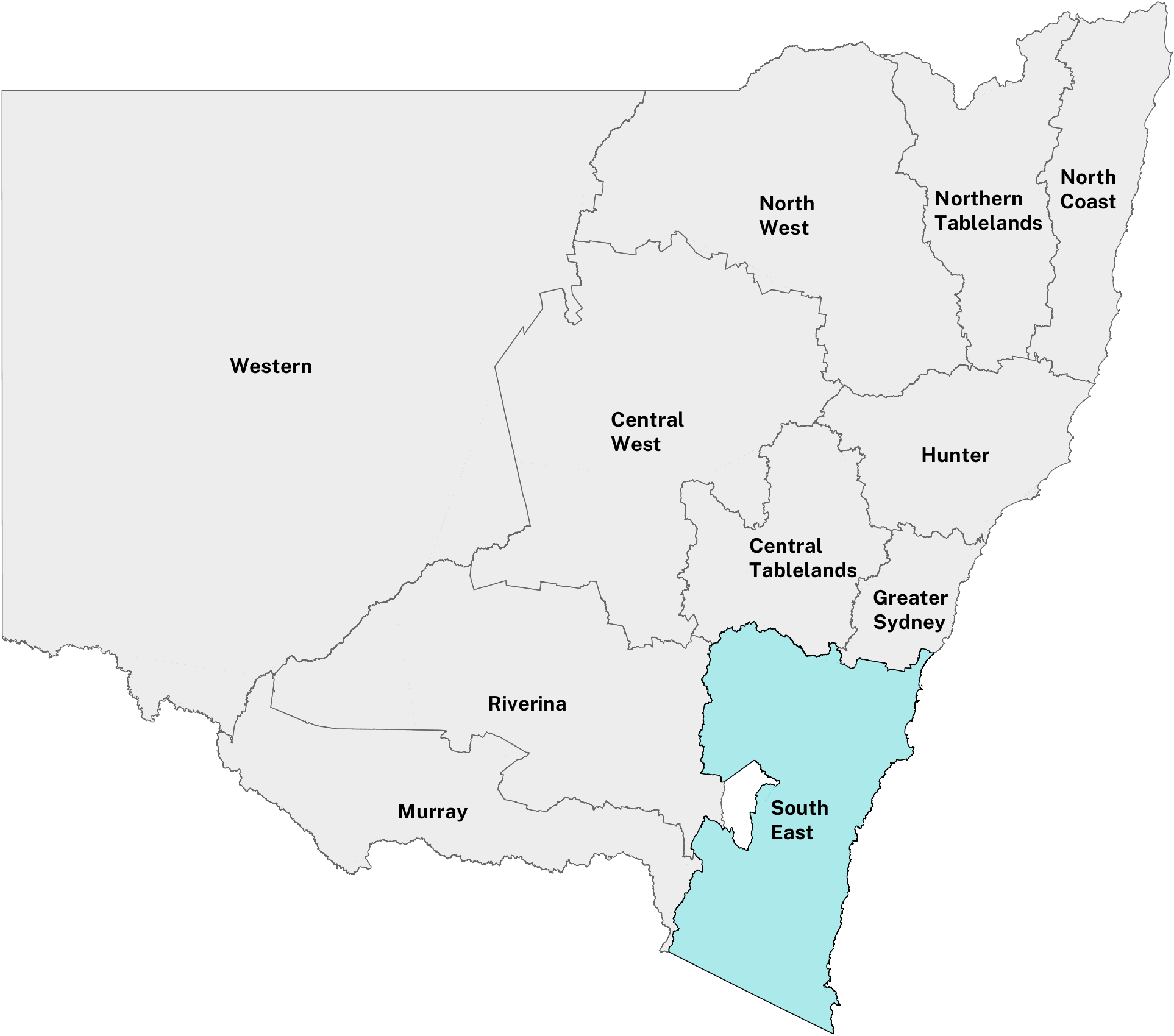 South-East Local Land Services
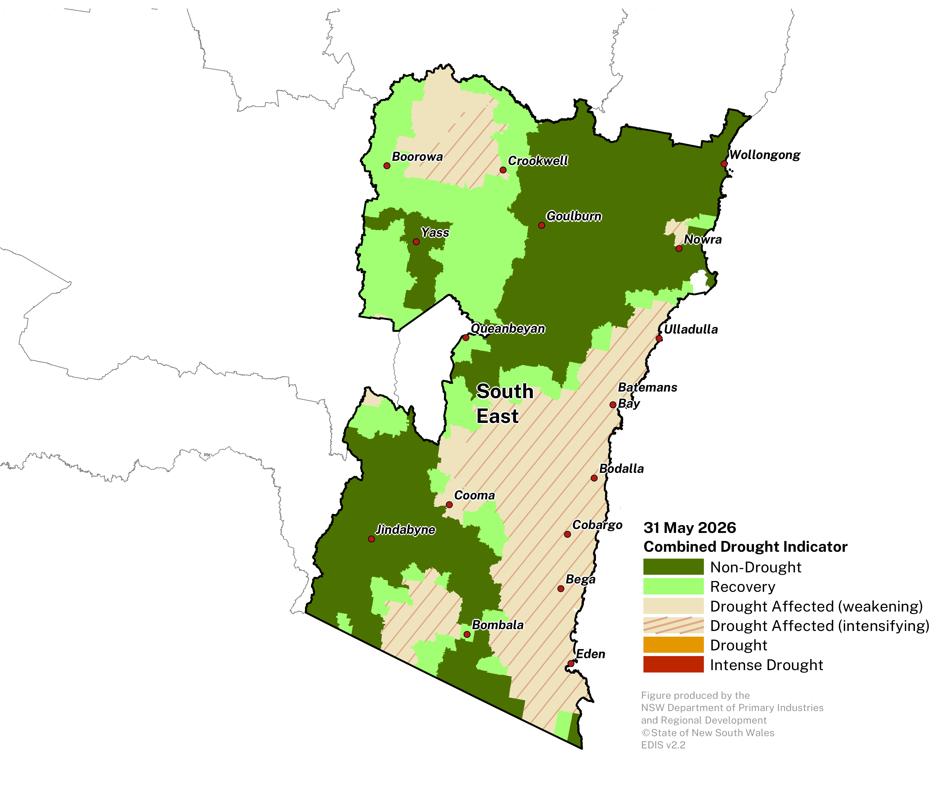
Mixed production outlooks as drought conditions expand.
- Drought conditions remain for large parts of the region. While above average rainfall in May will provide some short-term relief, further rainfall and opportunities for plant response is needed to trigger short-term recovery from drought conditions.
- For areas in the NSW-CDI Non-Drought category, recent rainfall will help maintain productive conditions.
- Producers are closely monitoring conditions, particularly surface water and feed availability, as they adjust winter planning and management decisions for livestock feeding or fodder programs.
Click on the scroll bar below the map to compare with previous months.
The most likely outcome from DPIRD’s Drought Forecast is for an expansion of the area in the Drought Affected category at the end of August 2026 (issued 31 May 2026).
- Some areas in the northeast and southwest will likely remain in the Non-Drought category.
- Areas that have seen a recent easing of conditions are most likely to transition from the Recovery category back to the Drought Affected category.
- There is moderate to high model agreement and moderate past accuracy for this forecast period.
| NSW-CDI Category | April 2026 | May 2026 |
|---|---|---|
| Non-Drought | 60.4% | 51.2% |
| Recovery | 25.1% | 21.1% |
| Drought Affected - Weakening | 2.1% | 3.1% |
| Drought Affected - Intensifying | 12.4% | 24.2% |
| Drought | 0.0% | 0.0% |
| Intense Drought | 0.0% | 0.0% |
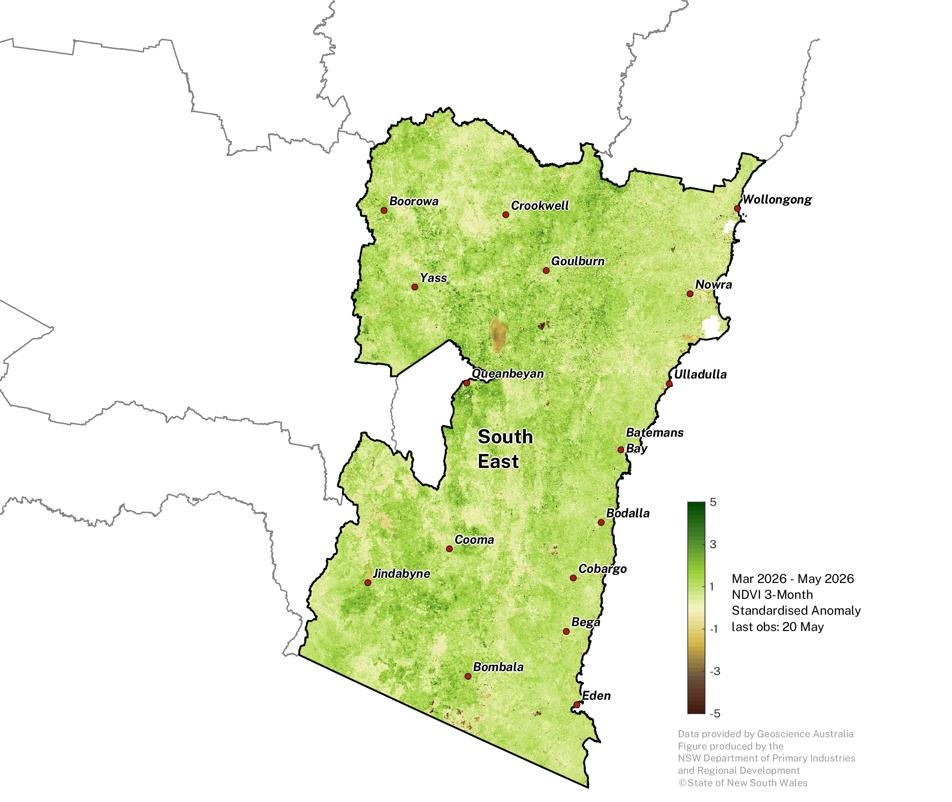
Normalised Difference Vegetation Index
Plant greenness levels remain variable across the region.
- Follow-up autumn rainfall has improved plant greenness levels for many areas.
- Anomalies remain below average for parts of the region.
- The full influence of rainfall in late May will be available in the next Update.
Note that some of the extremely negative NDVI areas (brown patches) are water bodies or from the influence of forestry operations.
The NDVI anomaly is a useful measure of vegetation density and plant health. It estimates the amount of green vegetation there is in the landscape compared to what is expected at the given time of year, against the baseline period 1987 - 2020
Individual Drought Indicators
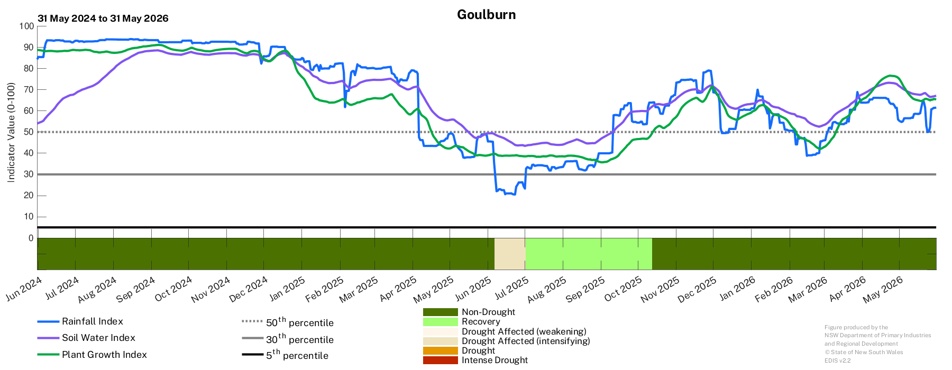
Drought indicators remain variable across the region.
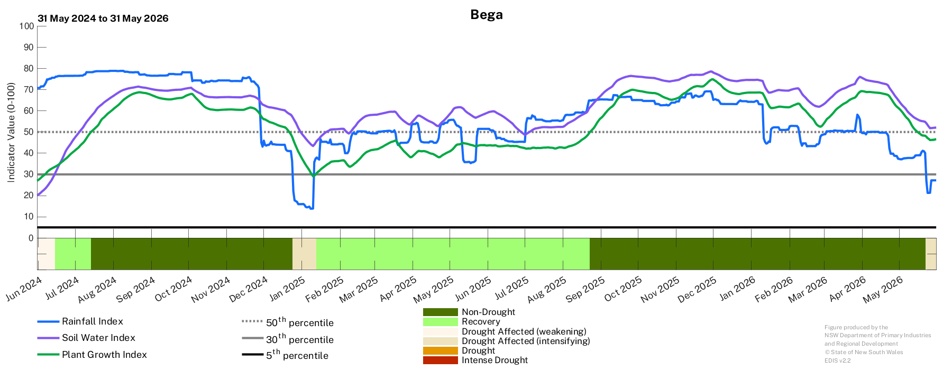
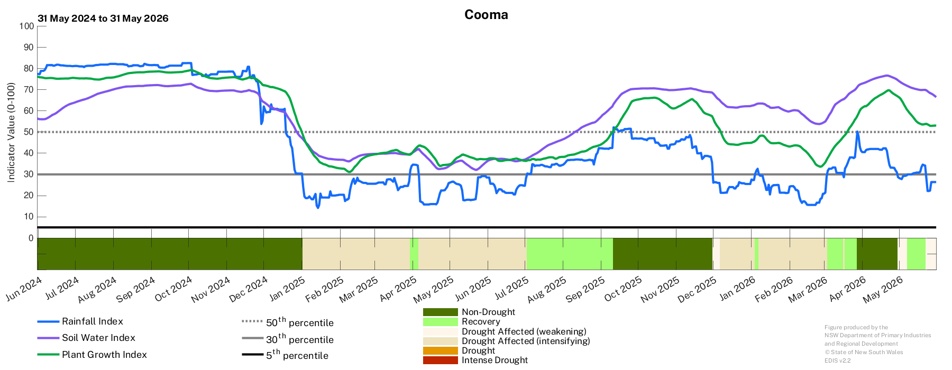
- While still high, the underlying drought indicators have declined over the past month at many locations across the region including Bega and Cooma.
- The underlying indicators at many locations are currently fluctuating between the Drought Affected and Recovery NSW-CDI categories (for e.g. Cooma). This is being driven by small changes in the Rainfall Index. Further rainfall will support a sustained transition into the Recovery category.
- Further rainfall will be required to maintain current production conditions and ensure areas do not transition into the NSW-CDI Drought Affected category.
- DPIRD continues to monitor conditions closely.
Observing the trends of the underlying drought indicators of Soil Water, Plant Growth and Rainfall is useful in tracking long-term changes in conditions.
Find out more about the underlying drought indicators here: https://www.dpird.nsw.gov.au/climate_applications/interactive-drought-map/Learn-more/understanding-the-cdi-phases
To access a Drought History chart for your Parish, visit the Seasonal Conditions Information Portal.