

Traditional screens are easily blocked by debris
This requires the use of more water to backflush material out of pipes. Debris blockages are costly to the farmer when equipment is damaged, and backflushing is required.

Fish screens are manufactured in Australia
A fine mesh barrel surrounds the pump offtake, preventing fish from being sucked into the pump.

Fish screens are self cleaning
A brush runs over the surface of the rotating mesh drum to clear the mesh of debris.

Pump screen being installed
Wambuul / Macquarie River

Pump screen installed
Baaka / Darling River
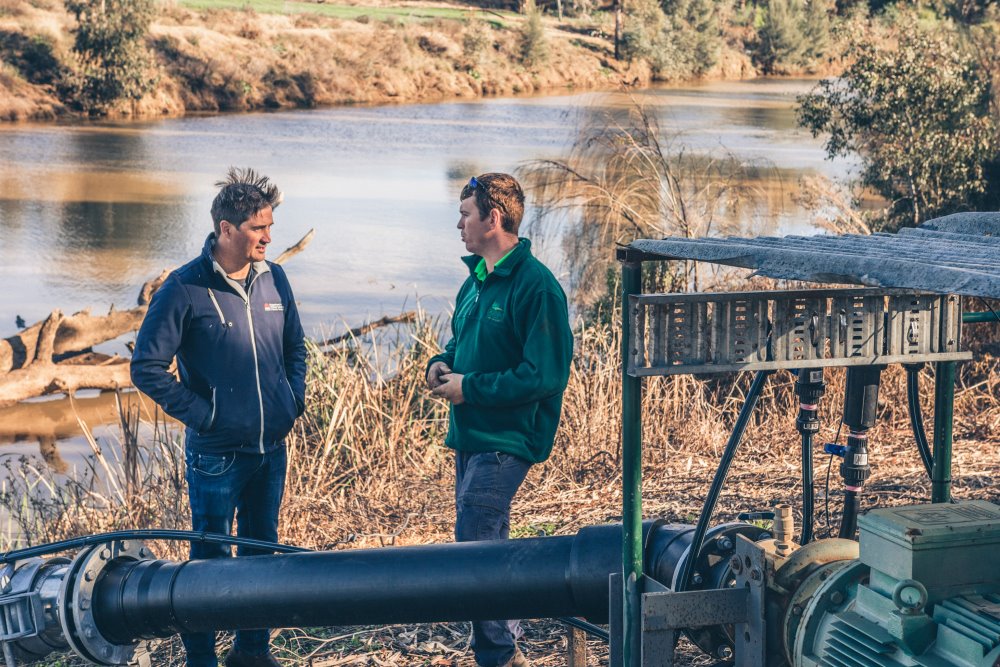
Collaboration is key
Modern fish screening
Modern fish-protection screens keep native fish and debris in natural waterways and out of water infrastructure. The automated, self-cleaning technology provides real benefits for fish, fisheries, farms and communities.
Modern screens replace outdated, ineffective “trash racks”. They protect 90% of native fish that would otherwise be injured or entrained by infrastructure. Modern screens are best practice for water access – available for any water diversion, of any size.

In NSW over 4,500 water pumps are operated for irrigation. Almost all of these are either unscreened or use outdated ‘trash racks’, which provide limited or no protection for native fish and burden farmers with unnecessary maintenance expenses caused by incoming debris (over $500,000 annually in some cases).
Modern self-cleaning screens have a range of benefits:
- Protect 90% of native fish
- Save water & labour
- Reduce energy costs & emissions
- Are self-cleaning and retractable
- Require far less maintenance
- Made in Australia
- Backed by 10+ years of science.
DPIRD - Fisheries has worked with manufacturers and water users to develop specifications for modern screen design. The key is to reduce the velocity of water entering a diversion, without reducing the volume of water that can be accessed – by making the screen area larger, a much finer mesh can be used.
DPIRD - Fisheries is helping water users modernise their water diversions. This is an important complementary measure to the delivery of water for the environment and other measures designed to restore aquatic ecosystems and support long-term industry sustainability and profitability.
A strategy for success
 The NSW Diversion Screening Strategy (PDF, 37108.97 KB) outlines a coordinated approach to protect native fish while supporting sustainable water use across the state.
The strategy prioritises the largest diversions for screen installations and describes a range of actions to support adoption of this technology by water users.
The strategy sets a clear pathway for assessment, design and delivery of screening projects, creating environmental, economic and cultural benefits for regional communities.
The goal is to help restore river health, improve on-farm water efficiency, and strengthen biodiversity outcomes of conservation efforts.
Visit Fish Screens Australia to find more about screening, current projects, research and news.