

Tales from the Tube
Research updates from the temporary tube fishway trial at the Lake Wetherell Outlet Regulator in Menindee
An Australian first
The Fishheart Tube Fishway is being used temporarily at Menindee for the first time in Australia as part of a three-year trial. The technology is proven overseas, but needs to be evaluated for its performance under local river conditions with native species.
Follow along here for regular updates as the trial unfolds from 2024-2027. We’ll share findings, images and stories from the Fisheries Research team – giving you a clear window into the science as it develops, ahead of formal publication.

How does the Fishheart unit work?
The Fishheart is a siphon-assisted tube fishway:
- It creates a steady, siphon-driven flow through a floating tube that allows fish to move up and over barriers like dams and weirs.
- Cameras inside the tube, paired with an Artificial Intelligence (AI) system, automatically record and identify fish as they pass.
- While the system has been applied in Europe and the USA, this is its first use in Australian inland rivers, where water is often more cloudy or muddy.
Find out more on the Fishheart Ltd website.
What is being tested?
Research is focused on four key questions:
- Can the AI system recognise Australian fish species? Training it with Murray Cod, Golden Perch, Bony Herring and others.
- Is passage safe for fish? Testing with live fish and electronic “Sensor Fish” that measure pressure, turbulence and collisions.
- Does it work for different species and sizes? Measuring passage success across a wide range of native fish.
- Do fish actually use it? Monitoring attraction and entry rates to understand how effectively fish are guided into the tube.

Year 1 update
The trial will run over four migration seasons from summer 2024/25 to summer 2027/28.
The Fishheart was installed at Menindee in early 2025 for Year 1 of operation and evaluation. Despite a short operating window outside the main migration period, over 7,500 fish movements were recorded through the system.
These preliminary findings from Year 1 were used to improve performance in Year 2.
Read the Year One Report Card.
Read the full Fishheart Year One Update.
Year 2 update | February 2026 interim results
Year 2 of the trial is underway and has delivered a substantial increase in fish passage.
As of 24 February 2026, 19,028 fish movements have been recorded since 26 September 2025, more than doubling the approximately 7,500 movements recorded during the Fishheart's first, shorter year of operation.
Passage has included more than 10,700 Bony Herring and over 4,200 Golden Perch, with Murray Cod and other native species also recorded. Golden Perch movement has increased markedly since late December, with some of the highest daily passage rates occurring in late February.
The technology has continued to improve in Year 2. Wider camera coverage and upgraded lighting have significantly strengthened the AI fish-identification function, reducing the proportion of fish classified as unidentifiable from 65.7% in Year 1 to approximately 8% this season. Fisheries Researchers continue to manually review images to further improve classification accuracy and validate counts.
Read our reports:
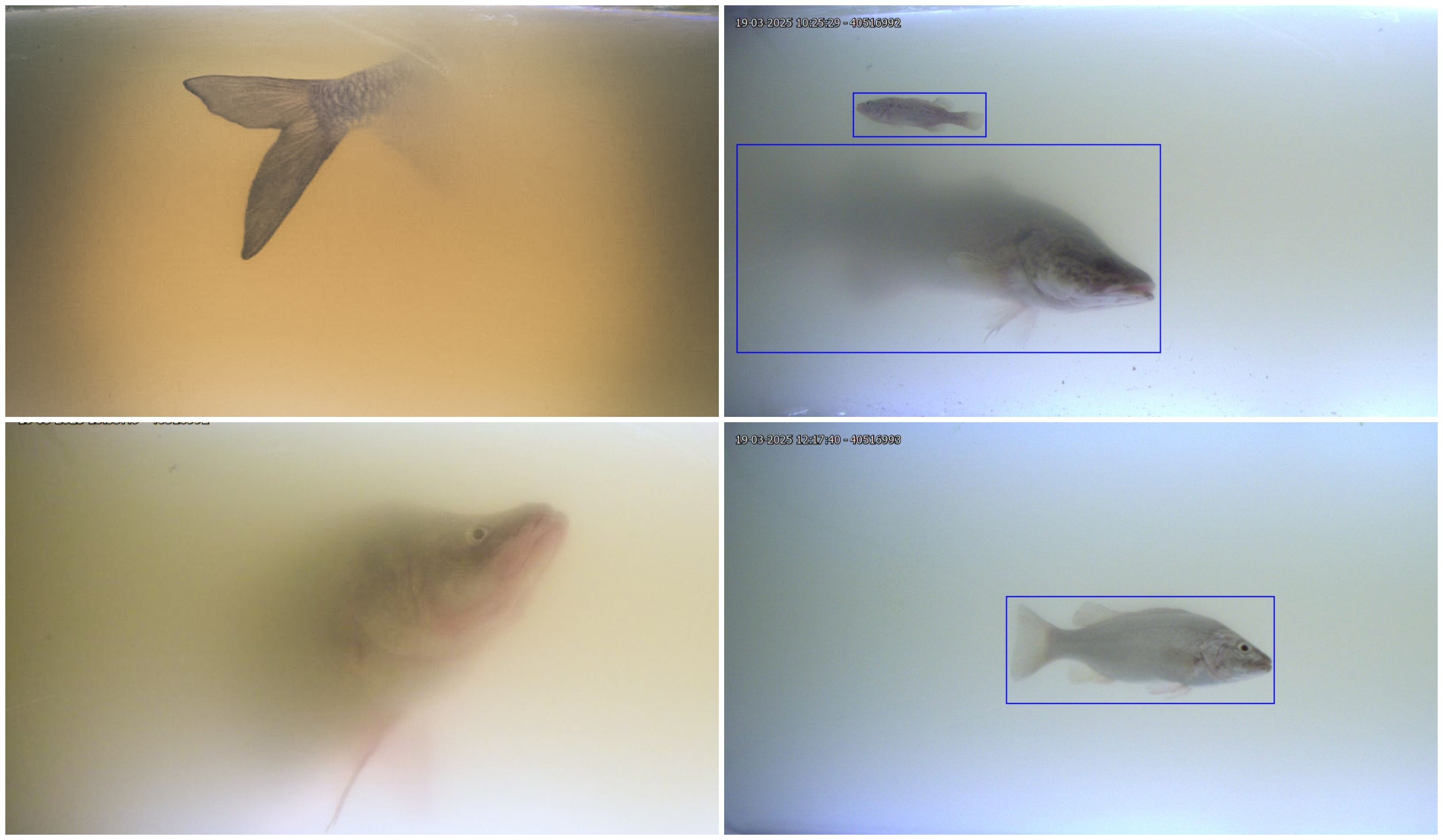
Sample images from the tube
No results were found


Last cast
Tales from the Tube is about sharing the story of this trial – from early progress through to the rigorous evaluation of the Fishheart fishway at Menindee.
The updates presented here are preliminary and non–peer-reviewed, shared openly to keep the community informed.
The ultimate goal is to build a robust, peer-reviewed body of science, providing a clear assessment of this technology’s performance and its potential role in supporting fish passage more broadly.
For more information contact Principal Research Scientist Dr Craig Boys.