
Dairy industry terms and definitions
Understanding dairy terms and definitions
 Understanding the dairy terms and definitions in these guidelines is important for both dairy developers and consent authorities. The NSW dairy industry is adopting more complex systems that need new facilities and management practices. These changes have introduced new language for all parties involved in dairy, land use planning, and environmental planning and management.
The incorporation of permanent feeding areas and housing facilities into a dairy system provides improved management and flexibility for operators to prepare for and respond to climate variability and extreme weather events. They increase options to reduce farm risks and create an operating environment that is centred on cow comfort and workforce wellbeing. These facilities also open up opportunities to explore technologies that can improve the efficiency of the dairy system.
The dairy complex is the entire land area encompassing the dairy (dairy parlour) where cows are milked, as well as areas where they are contained for feeding and/or loafing (resting), held in yards, and where feed is delivered, prepared, handled and stored. An area for trucks to park and collect milk, and farm vehicle parking is also included. Infrastructure associated with the storage and treatment of manure (manure management system) is incorporated, however, manure reuse areas are not.
Manure includes faecal and urinary excreta in liquid, slurry, semi-slurry (often referred to as sludge) and solid form. Feed waste, bedding and soil are also managed within the manure management system. Figure 1 explains these classification and handling options. Effluent is a term used for liquid manure and it is produced by cleaning the dairy and holding yards with water. It can contain small volumes of residual milk and chemicals used to clean dairy plants and equipment. A controlled drainage area collects and contains the water run-off while excluding rainwater inflows. Effluent is a valuable resource within the system as it may be stored, recycled and used for washing manure from holding yards, alleys, feedpads and contained housing.
The manure management system of a dairy complex is designed to manage the manure stream from its point of generation, such as the facilities outlined in this section, through to its typical reuse as a valuable nutrient source onto land (manure reuse areas) and/or, in very specific scenarios, exported off-site as saleable byproduct. It typically includes infrastructure to contain (for example, controlled drainage), manage (for example, solids traps and settling ponds), store (for example, storage ponds and bunded, impermeable flooring stockpile areas) and reuse manure. Chapter 7 of the National Guidelines for Dairy Feedpads and Contained Housing provides more technical information on the different design options and dairy system considerations for each of these components.

Facilities of NSW dairy farms
The incorporation of permanent feeding areas and housing facilities into a dairy system provides improved management and flexibility for operators to prepare for and respond to climate variability and extreme weather events. These facilities reduce farm risks and create an operating environment that improves cow comfort and workforce wellbeing. They also open opportunities to explore technologies that can improve the efficiency of the dairy system.
Most NSW dairy farms use feed delivery facilities, either permanently or temporarily (time-of-day/seasonally), within their operation. Temporary use may include daily routines between morning and afternoon milkings to better manage cow performance, or to avoid risks during seasonal and extreme weather conditions. During periods of declared drought or similar emergency relief, these facilities may be used without planning or environmental approvals subject to meeting exemption conditions. This is explained in Sections 3 and 5.
Feedpads
Feedpads are areas where cows are given extra feed to supplement the pasture they graze in the paddock.
An area located in a pastured or bare cropping paddock, a designated sacrifice paddock or along a laneway without a prepared surface where feed is delivered to cows either on the ground, in hay rings or other receptacles. Can be readily relocated to other sites on the farm.

Formed earthen pad with a compacted surface shared by cows and vehicles and regularly scraped. Fixed structures including purpose-built concrete troughs or nib wall under cable or hot wire +/- narrow cement strip for cows to stand on while eating +/- loafing areas, shade structures.

Formed earthen pad with a compacted surface shared by cows and vehicles and regularly scraped. Fixed structures including purpose-built concrete troughs or nib wall under cable or hot wire +/- narrow cement strip for cows to stand on while eating +/- loafing areas, shade structures.

Concrete areas for cows and feed (usually separated) which can be scraped, or flood washed +/- impermeable earthen surfaced loafing areas, shade structures, sprinklers, and fans for cow cooling. Area is incorporated with the manure management system.

Concrete and/or impermeable earthen areas for cows and feed (usually separated) which can be scraped, or flood washed, with solid-roofed or shade sail structures over feeding table and/or loafing areas +/- sprinklers and fans for cow cooling. Area is incorporated with the manure management system.

Temporary housing
Temporary housing refers to fixed shelters used on grazing farms to offer temporary shelter to cattle from wet, cold, windy conditions, which can stress cows and lead to mastitis, as well as damage paddocks and laneways. These shelters also provide relief in summer when heat can adversely affect milk production and cow welfare.

Contained housing/areas
Contained housing/areas are integrated facilities where cows are contained for the purpose of access to water, feed such as hay, silage, grain or total mixed ration (TMR), and housing with zero grazing. They have many fixed structures, including well-developed feed storage and mixing facilities and manure management systems. Machinery, such as mixer wagons are used and there are typically sprinklers and fans for cooling. They may also include milking systems within the same area.
These systems typically have centralised roofed shelters over non-composting bedding packs, composting bedding packs, or packs that only actively compost occasionally, located in impermeable earthen pens that are adequately sloped for drainage to a centralised manure management system. The dairy herd is grouped into various management groups. Typically, feed troughs and water supply are located away from the shelters to improve cattle movement and reduce congestion. Manure from the pens is regularly dry scraped and stockpiled in a designated area for storage or composting and reused as bedding or applied to land supporting fodder production. These systems are best in hot, arid climates with soils that drain well.

A large open resting area, bedded over an impermeable base with a range of different bedding materials to create a comfortable lying surface that encourages cows to lie down. There are no stalls or partitions and the resting and exercise areas are combined. Ventilation is natural or mechanically assisted. These facilities are usually classified by how the bedded area is managed. A deep litter pack uses absorbent bedding material that is added regularly and there is no mechanical tilling. A compost bedded pack is mechanically tilled at least twice a day.
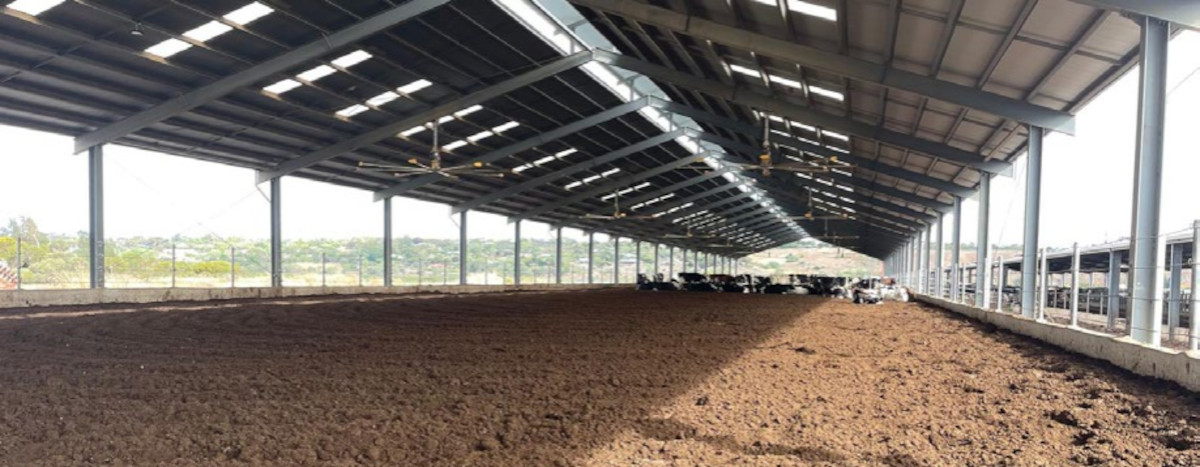
A large, permanent, engineered structure in which cows are fed and housed 24 hours a day. Freestall refers to the bedding area (or cubicles) where cows lie down and rest. Additional loafing areas may also be provided. Cows are kept in pen groups and access a TMR at a feed bunk via alleyways. Cows leave the facility 2 to 3 times each day to be milked in an adjacent milking parlour. Alternatively, in a robotic freestall, milking stations are inside the facility. Ventilation can be natural, (with or without assistance from mechanical ventilation) crossflow or tunnel.

Dairies
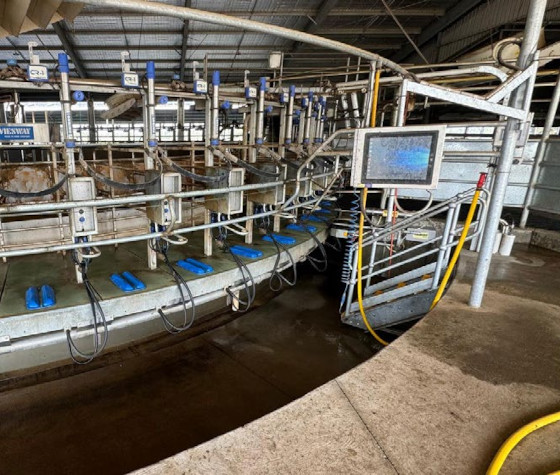 A dairy, also known as a milking parlour, is a specialised area where cows are milked in groups. They come in various configurations, such as parallel, herringbone, and rotary, each with its own method for positioning the cows and the workers or machinery that manage the milking. They are supported at entry and exit by holding yards that are mostly concreted and may have shade structures, sprinklers, and fans for cooling. If there is a feedpad, it might replace the exit holding yards. In a dairy complex where the dairy is supported by a contained housing system, the 2 separate facilities are close together to ensure the safe movement of cows and reduce the time they spend away from feed.
Robotic milking systems are becoming more common in NSW. These systems allow cows to voluntarily present for milking throughout the day or night, or in small group numbers by controlled access (for example, by grouped paddocks or pens in contained housing). New developments are increasingly using contained housing that integrates robotic dairy systems into one facility.

Dairies have milk cooling (vats) and refrigeration systems that use heat recovery to heat water for cleaning purposes. Typically, this equipment is housed in a separate room beside the main parlour, which may include the dairy office and/or observation room. Most dairies have sophisticated monitoring and data management systems that closely monitor the health and performance of each cow, at least twice daily, as they are milked. Advancements in dairy design have significantly improved labour efficiency and/or changed the workforce skills required.