
Potato mop-top virus
PMTV (Pomovirus solani) is a significant plant virus affecting potatoes, transmitted by the organism powdery scab (Spongospora subterranea), leading to reduced tuber quality and yield.
Alert
Potato mop-top virus (PMTV) is an exotic plant virus recently detected in potato crops in Tasmania. It is not present on mainland Australia. If you suspect the presence of PMTV in NSW, you must notify NSW DPIRD. There are no food safety or human health risks associated with the virus and all potatoes remain safe to consume.
Biosecurity Tasmania are working with impacted growers and potato industry bodies to respond to the detection and control measures have been put in place.
To prevent this virus from entering NSW, NSW DPIRD have issued this Control Order. The Control Order regulates the movement of PMTV carriers from Tasmania into NSW.
NSW Control Order: NSW PMTV Control Order
Explanation Guide: Explanation Guide to NSW PMTV Control Order
PMTV is a plant virus that affects the leaves, shoots and tubers of potato plants. The virus does not present any health risks to humans. The virus is transmitted by the soil-borne organism that causes powdery scab (Spongospora subterranea). Powdery scab is widespread in many potato growing regions of the world.
Once it becomes established the virus can survive in the soil in the resting spores of its vector, powdery scab, even in the absence of a potato crop. The infection of the potato plant can occur directly by the potato tuber or via a powdery scab infection of the roots carrying the virus or contaminated soil. The virus cannot be mechanically transmitted plant to plant; it needs to be vectored by the powdery scab pathogen.
Reporting
If you suspect PMTV is present on your property, you must notify NSW DPIRD. You can report it by one of the following methods:
- Call the Exotic Plant Pest Hotline on 1800 084 881
- Email biosecurity@dpird.nsw.gov.au with clear photos and your contact details
- Complete an online form
Symptoms
Potatoes infected with PMTV can display both foliar and tuber symptoms:
- Tuber: distortions to the skin, deep cracking and rust-coloured arcs, streaks or flecks in the tuber flesh (also known as ‘spraing’). See image 5 for details.
- Foliar: yellow colouration and distortion of the leaves (Figure 2). Foliar symptoms only occur when infection is the result of infected seed potato, and even then, they are rare. These symptoms are similar to those caused by endemic diseases.
The virus is not evenly distributed within the plant, which can lead to unequal symptom development within the plant and even between individual tubers.
The presence and severity of symptoms can vary depending on the potato variety, environmental conditions and the source of infection. Some varieties may exhibit skin symptoms; however, PMTV may not be detected until the tuber is cut open. Some potatoes may be asymptomatic, showing no symptoms at all.

Figure 1. Necrotic lesions of PMTV infected potato tuber. Image Source: Owusu Domfeh, North Dakota State University.

Figure 2. Foliar symptoms of PMTV. Image Source: William M. Brown Jr., Bugwood.org

Figure 3. Root gall symptoms of powdery scab infected potato roots. Image source: Miller Research.

Figure 4. Lesion symptoms of powdery scab infected potato tuber. Image source: Sandra Jensen, Cornell University, Bugwood.org
Damage
The direct impact to potato crops is a reduction in yield although this can be highly variable depending on the potato variety and growing conditions, ranging from little to no impact up to 67% reduction in yield. The appearance of spraing symptoms also reduces marketable yield of tubers as they are rejected by food manufacturers.

Figure 5. Potato with markings (Spraing) indicating the presence of mop-top virus. Image source: Bayer
Distribution
Potato mop-top virus was first identified in 1966 in the United Kingdom. Since then, the virus has been reported in many other potato growing regions around the world such including Asia, Europe, North America, New Zealand, and South America. In 2025 it was confirmed in Tasmania.
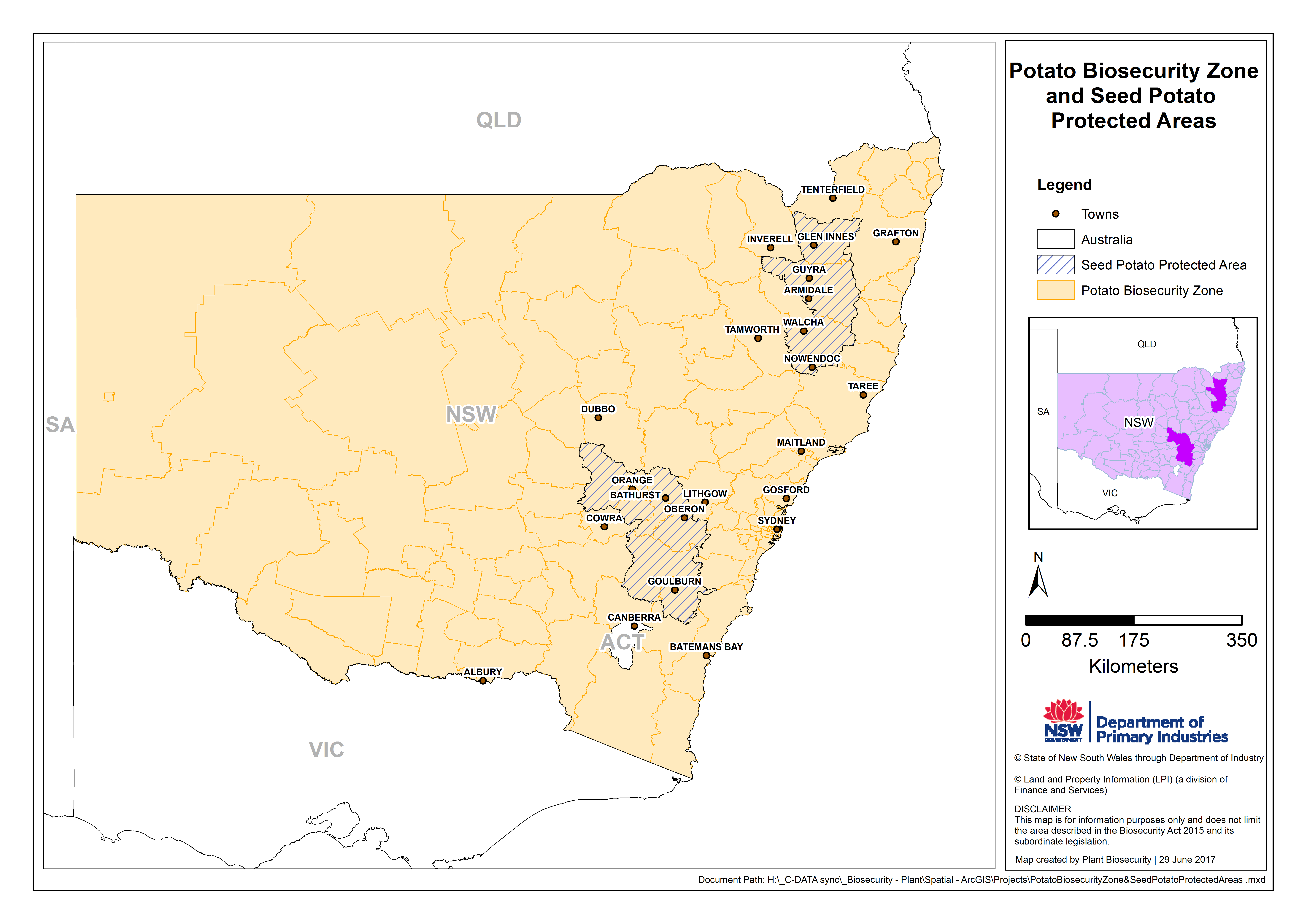
The vector, powdery scab has been found in most potato growing regions in Australia, except in the Seed Potato Protected Areas in NSW. The carriers of this pathogen are regulated into these protected areas.
For regulated areas in NSW see:
Interactive: NSW movement zones | Department of Primary Industries
Image: Potato Biosecurity Zone and Seed Potato Protected Areas
What you can do
Always remain vigilant in looking for unusual signs of plant disease in your potato plants and stock.
Transmission of PMTV into new areas is by powdery scab, a soil-borne pathogen. Limiting soil movement from one area to another can help minimise the risk of spreading the disease.
Implementing on farm biosecurity come clean go clean practices helps minimise the risk of introducing or spreading the disease.
Simple steps you can implement are:
- Have a designated high pressure washdown area (vehicles, machinery & equipment).
- Clean clothing, boots, equipment and machinery before and after use in production areas.
- Limit the movement of visitor or contractor vehicles on the property.
- Report signs of disease straight away to the Exotic Plant Pest Hotline 1800 084 881.