

American serpentine leafminer
| Primefact number | Edition | Published | Author |
|---|---|---|---|
| Jul 2021 | Plant Biosecurity and Product Integrity |
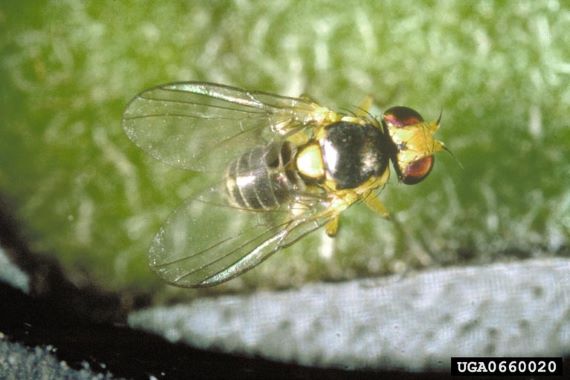
Current situation
American serpentine leafminer (Liriomyza trifolii) has been detected in the Torres Strait, Far North Queensland, and Western Australia.
American serpentine leafminer has NOT been detected in NSW. American serpentine leafminer is a separate species to serpentine leafminer (Liriomyza huidobrensis) which was detected in NSW in October 2020. For more information on serpentine leafminer and its management in NSW please visit our separate page on serpentine leafminer.
American serpentine leafminer poses a serious threat to NSW's horticulture, nursery production, and agricultural plant industries. Severe infestations of American serpentine leafminer may result in premature leaf drop, poor growth, and reduced crop yields.
Pest status in Australia
American serpentine leafminer is considered an Emergency Plant Pest under the Emergency Plant Pest Response Deed. The Consultative Committee on Emergency Plant Pests is currently undertaking investigations to determine whether the pest is technically feasible to eradicate. The department is assisting this national response by examining the pesticide resistance profile of American serpentine leafminer to assist with management advice.
Public advice & reporting
American serpentine leafminer can be confused with other Australian native and introduced Liriomyza species. Information on exotic leaf miner species including American serpentine leafminer can be found on the Plant Health Australia website.
Although hard to distinguish from other Liriomyza species, you can be on alert for unusual leafminer activity on new host plants or in environments not previously impacted by Liriomyza leafminers. If you identify any leafminer activity you consider to be unusual you can report it to the department.
Reporting
Immediately report suspected American serpentine leafminer by one of the following methods:
- Call the Exotic Plant Pest Hotline 1800 084 881
- Email biosecurity@dpi.nsw.gov.au with a clear photo and your contact details
- Complete an online form
Reports will need to be confirmed by department entomologists.
Actions to minimise risk
Production nurseries and growers should check their crops regularly for signs of plant pests and disease.
Put in place biosecurity best practice actions to prevent entry, establishment and spread of pests and diseases:
- practise “Come clean, Go clean”
- ensure all staff and visitors are instructed in and adhere to your business management hygiene requirements
- monitor your crops regularly
- monitor and control volunteer plants that can harbour the pest
- source plant material of a known high health status from reputable suppliers
- keep records
Good on-farm biosecurity practices are vital to preventing incursions of plant pests and diseases. The farmbiosecurity.com.au website has helpful information that can be tailored to your property.
