

Report Equine Herpes Virus - 1
Equine Herpes Virus - 1 (EHV1) is a notifiable disease and is declared as an Emergency Animal Disease (EAD). If you suspect Equine Herpes Virus you must notify either Local Land Services on 1300 795 299 or the EAD hotline on 1800 675 888
Equine Herpes Virus - 1
Equine herpes virus 1 (EHV1) typically infects a wide range of tissues, which can causing severe systemic illness. There are two different variants of EHV1: abortigenic and neuropathogenic.
Equine Herpes Virus - 1 Neurogenic strain
Disease information
What does Equine Herpes Virus - 1 Neurological Strain look like?
Infection with neurological strains of EHV1 results in damage to the spinal cord. Clinical cases vary and clinical signs can range from mild ataxia (incoordination) to paralysis in all four limbs and death.
The average time from infection to onset of clinical signs is 4 to 7 days (up to
14 days) and depends on the individual horse, viral virulence, and environmental factors including stress.
Neurological signs:
- Mild ataxia (incoordination) and paresis (weakness) in hindlimbs more often than forelimbs
- Severe hindlimb paralysis
- Recumbency (unable to stand)
- Loss of bladder and tail function and loss of skin sensation in the perineal and inguinal areas
- Paralysis in all four limbs
- Pyrexia (fever >38.5°C)
What should I do if I suspect Equine Herpes Virus - 1 Neurological Strain?
In Australia, if you suspect neurological disease in horses due to EHV1, you MUST report it immediately to the Emergency Animal Disease Hotline on 1800 675 888 or an Authorised Officer on 1300 795 299.
How is it diagnosed?
For advice about sampling and testing for EHV1, contact the NSW Animal and Plant Health Laboratories or call the Emergency Animal Disease Hotline on 1800 675 888.
Using a point of care test to test for neurological disease due to EHV1 is prohibited in NSW. A point of care test for neurological disease due to EHV1 can only be conducted under an exemption order or prohibited matter permit authorised by the Chief Veterinary Officer.
How is it spread?
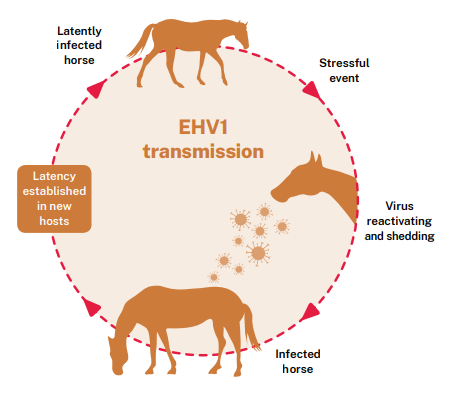
Infection of horses with EHV1 commonly occurs via the respiratory route, often with little or no sign of disease unless the mare is pregnant. Once infected with EHV1 the horse is usually latently infected for life. The virus lies dormant in lymph nodes or tissue of the nervous system and if the horse is stressed the virus can be activated again.
Does Equine Herpes Virus - 1 Neurological Strain affect people?
No, EHV1 is not zoonotic. Therefore, it does not affect humans
Other key information and resources
Strains of EHV1 causing neurological disease (equine herpesvirus myeloencephalopathy) is considered to be exotic to Australia. It is listed as Schedule 2 prohibited matter, and therefore must be reported immediately to an Authorised Officer if suspected.
Equine Herpes Virus - 1 Abortigenic Strain
Disease information
What does Equine Herpes - Abortigenic look like?
Clinical signs of EHV1 abortigenic may include:
- Pyrexia (fever >38.5°C)
- Abortion, usually in late pregnancy (8-10 months) but can occur as early as the 4 months
- Signs of respiratory infection (not always present)
- Expelled foetus covered in placenta
- Foals born alive but weak, depressed and die in a few days with signs of respiratory disease (when infected in late pregnancy)
How is it diagnosed?
For advice about sampling and testing for EHV1, contact the NSW Animal and Plant Health Laboratories or call the Emergency Animal Disease Hotline on 1800 675 888.
How is it spread?
Infection of horses with EHV1 commonly occurs via the respiratory route, often with little or no sign of disease unless the mare is pregnant. Once infected with EHV1 the horse is usually latently infected for life. The virus lies dormant in lymph nodes or tissue of the nervous system and if the horse is stressed the virus can be activated again.
Does Equine Herpes - Abortigenic affect people?
No, EHV1 is not zoonotic. Therefore, it does not affect humans
Other key information and resources
Glovebox Guide
Equine Neurological Diseases of Significance

Reporting animal biosecurity emergencies
Some animal pests and diseases, or residues in animal products or stock feed can have serious consequences for trade, production or human health. By remaining vigilant and acting quickly if you suspect a significant animal pest, disease, or residue you may be able to prevent these consequences. Don’t delay! Contact Local Land Services or ring the 24 hour hotline: