
Stock welfare during tough times
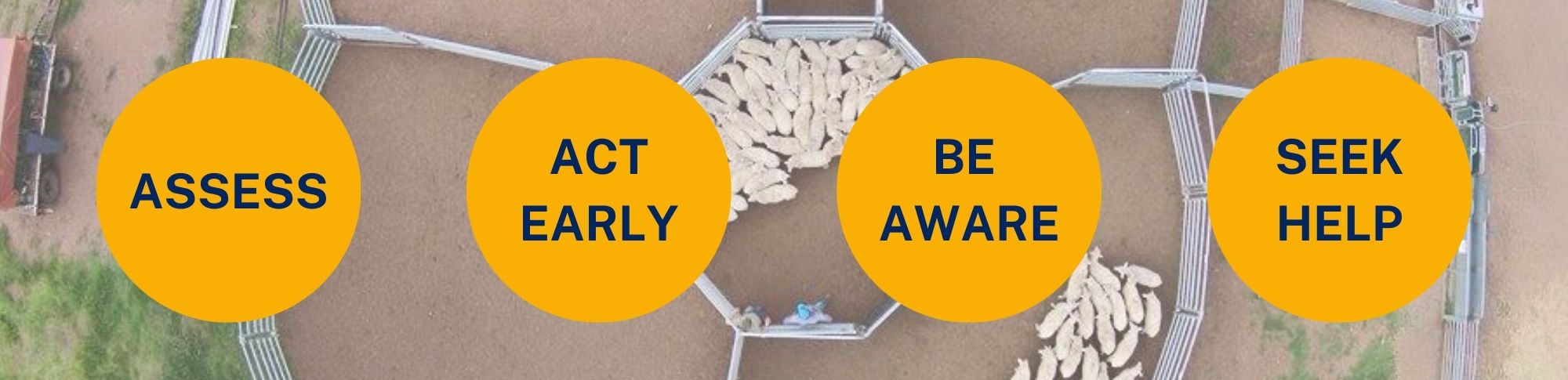
Animal welfare considerations are critical when managing stock during tough times, when feed and water resources are in short supply.
With seemingly increasing frequency of drought, fire and floods affecting our state, stock owners across NSW need to make decisions to effectively manage their stock. Your livestock and other farm animals are your responsibility and it is up to you to plan and prepare for their welfare. By being proactive and making decisions early, you will help ensure good animal welfare outcomes and compliance with the Prevention of Cruelty to Animals Act 1979.
Drought-affected properties – elevated risk
Livestock from drought-affected properties may be at higher risk of compromised welfare due to potentially depleted energy reserves.
Sheep who are lighter in condition, with reduced feed intake pre-transport have an increased susceptibility to transport stress, dehydration, and heat and cold stress. These issues can severely affect the animals’ welfare resulting in suffering, injury and death.
Planning transport - Is the animal fit to transport?
Before transport, livestock must be assessed to ensure they are fit for the intended journey.
Livestock is not fit to transport if it is:
- emaciated or weak (e.g. unable to stand or walk unassisted)
- dehydrated
- heavily pregnant (within 2 weeks of lambing)
Key considerations
You need to consider all aspects of the intended journey when transporting nutritionally deprived livestock. Careful planning and communication is essential when considering transporting livestock that are in light body condition, recently off shears and/or heavily pregnant.
- Minimise transport time. Ensure the journey is as short and direct as possible
- Provide quality dry feed up to the time of loading
- Provide unrestricted water access, especially in warm conditions and when cold snaps are not expected
- Minimise pre-transport handling to ensure livestock are rested and hydrated
- Avoid exposure to extreme weather
- Recently shorn sheep must not be transported during cold, windy and/or wet conditions
- Check weather forecasts before departure, especially if spelling or travelling overnight
- Stronger animals should be loaded on the top deck of double-deck trailers
- Identify spelling facilities on route in case of down/compromised livestock in transit
- Do not send weak or compromised livestock through saleyards
- If transporting to an abattoir, ensure they are fit for the intended journey, seek veterinary advice if you have any doubt, and make sure to inform the abattoir in advance
- Notify your transporter of the condition of the livestock to allow for correct stocking density
- Monitor animals regularly during transit
- Always match transport planning to seasonal conditions and animal condition
- Seek advice from Local Land Services if in doubt.
It is your responsibility to ensure that livestock are not placed in a condition where their welfare could be compromised. For support or advice, contact your Local Land Services or the website for a range of resources.
Factsheets and resources
Please click the links below to download the available resources.
DPIRD contacts and links
Local Land Services (LLS) can provide advice on drought management including animal health, nutrition and pasture management. Call 1300 795 299 or visit your nearest LLS office.
Rural Adversity Mental Health Program (RAMHP) is a state-wide program that links rural people to the help they need. Visit the website or call the NSW Mental Health Line on 1800 011 511.
Primary producers are encouraged to visit DroughtHub for the latest State Seasonal Updates and information on a range of support services to prepare for and manage drought conditions.
The publication Welfare scoring nutritionally deprived beef cattle, dairy cattle and their crosses, sheep and horses is a useful guide to assessing animal condition. This guide is also referenced in the Regulation.
Managing drought is a handbook that has been prepared to assist primary producers in making financial and management decisions which will see them through extended dry periods.
Drought Feed Calculator App. Designed for use in the paddock to develop well-informed and cost efficient feed strategies for sheep and cattle. Search “Drought Feed Calculator”