May 2026
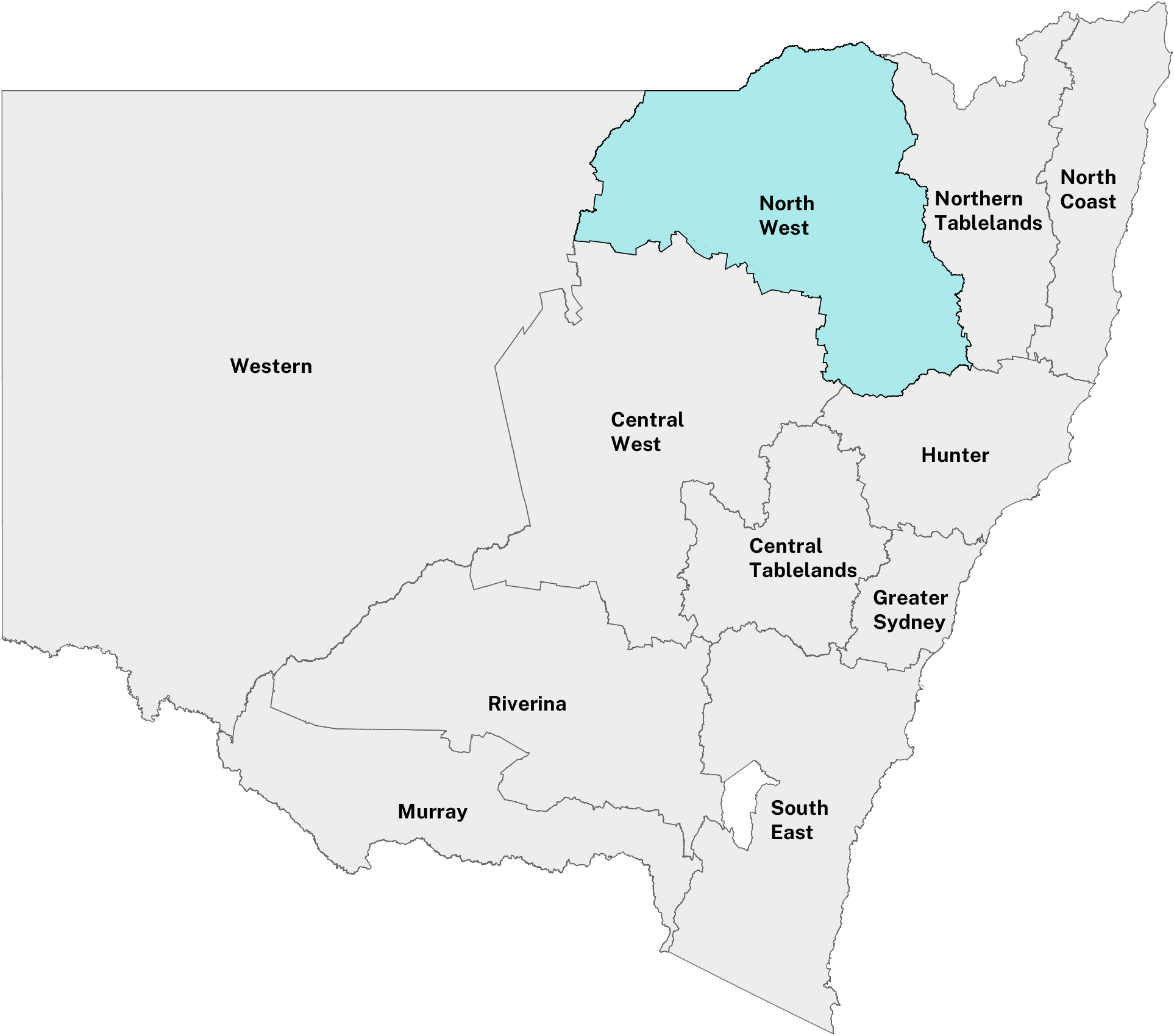 North West Local Land Services
Above average rainfall in May, with varied conditions across much of the region.
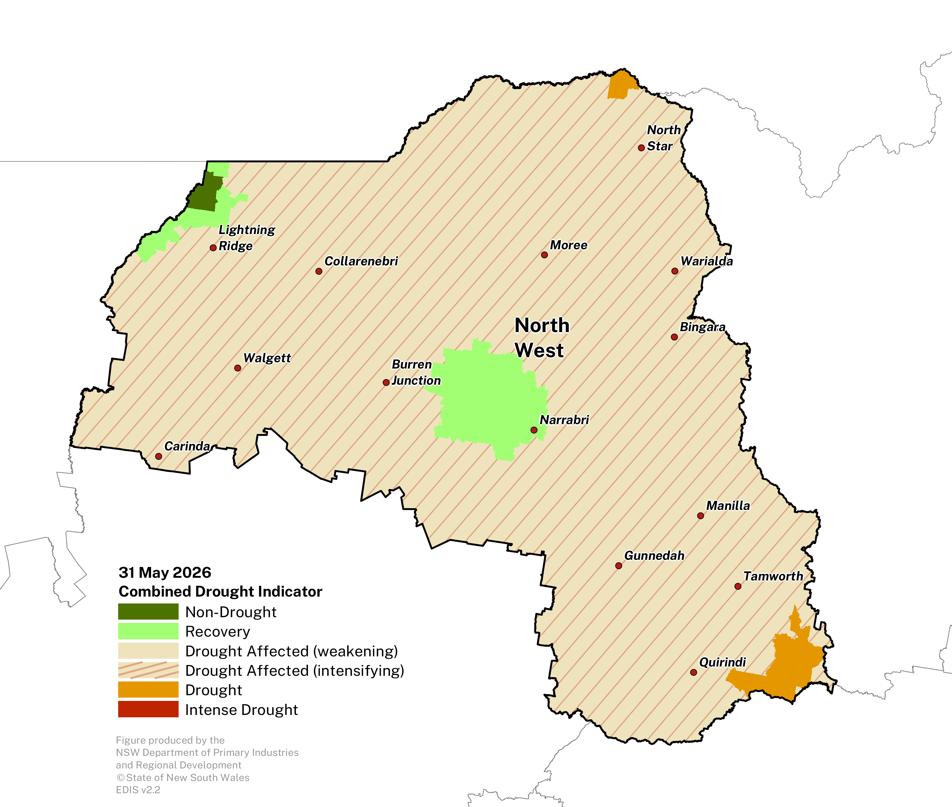
- Year-to-date rainfall has been well below median across much of the region, impacting on-ground conditions. Large parts of the LLS region remain in the NSW-CDI Drought Affected category.
- Above average May rainfall has provided some short-term relief, particularly in the north of the region, and has provided opportunities for the planting of late season grain and fodder crops.
- Although the rain has helped restore on-farm water supplies, it is unlikely to alleviate the coming winter feed gap being managed by livestock producers.
- On ground reports indicate many livestock producers have actioned their drought management strategies early, with destocking, confinement, or lot feeding of stock.
- Follow up rainfall will be crucial to need to sustain any improvements from recent rainfall.
Click on the scroll bar below the map to compare with previous months.
The most likely outcome from DPIRD Drought Forecast suggests that the entire region is likely to be in the NSW-CDI Drought Affected category at the end of August 2026 (issued 31 May 2026).
- Areas that have recently seen an easing of conditions are most likely to transition back from the Recovery category to the Drought Affected category at the end of August.
- The forecasted decline in conditions is being driven by the increased chance of below median rainfall for the coming three months.
- There is high model agreement and low to moderate past accuracy for this forecast period.
| NSW-CDI Category | April 2026 | May 2026 |
|---|---|---|
| Non-Drought | 2.0% | 0.7% |
| Recovery | 0.0% | 5.8% |
| Drought Affected - Weakening | 0.0% | 0.0% |
| Drought Affected - Intensifying | 97.7% | 92.8% |
| Drought | 0.3% | 0.8% |
| Intense Drought | 0.0% | 0.0% |
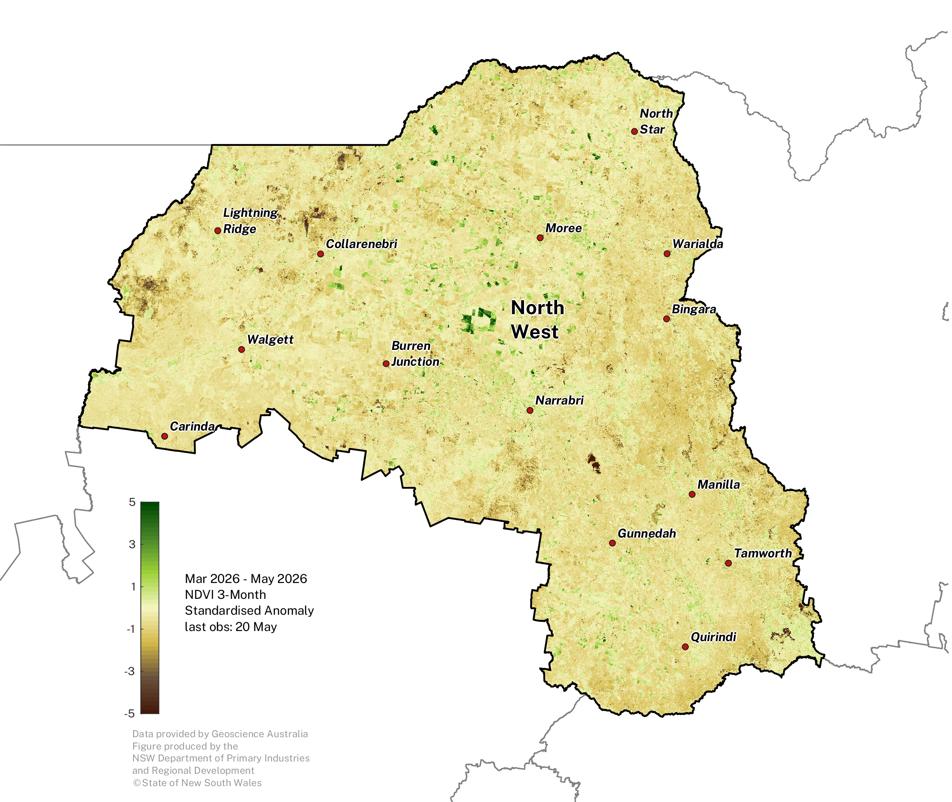
Normalised Difference Vegetation Index
Plant greenness levels are below average across the region for the March to May period.
- The full influence of rainfall in late May will be available in the next Update.
Note that some of the extremely negative NDVI areas (brown patches) are water bodies.
The NDVI anomaly is a useful measure of vegetation density and plant health. It estimates the amount of green vegetation there is in the landscape compared to what is expected at the given time of year, against the baseline period 1987 - 2020.
Click on the scroll bar below the map to compare with previous months.
Individual Drought Indicators
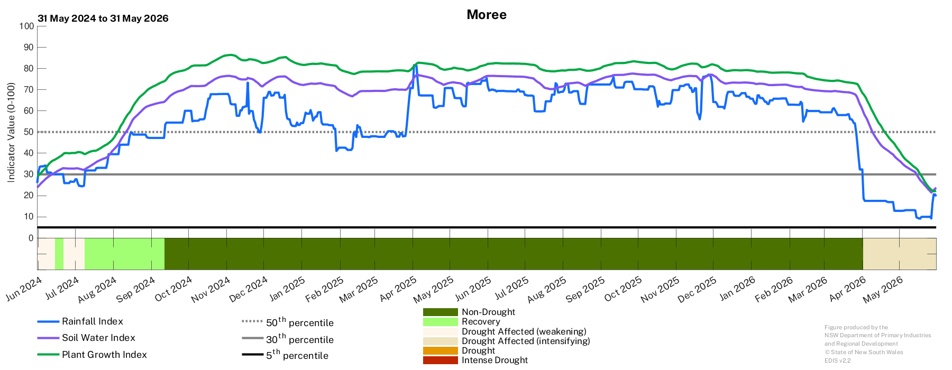
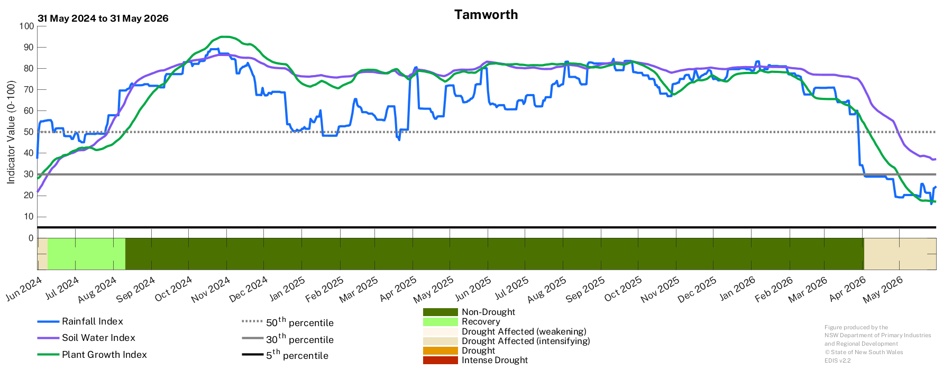
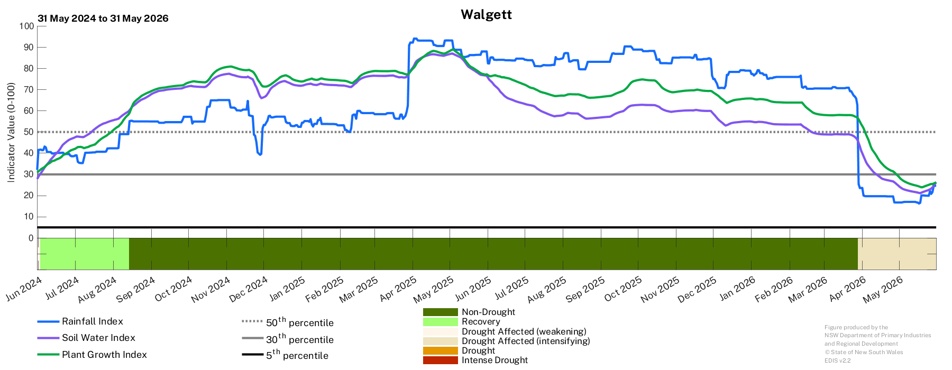
Despite late autumn rainfall, a drying trend continues across the region.
- The decline in one or more of the drought indicators continues to be observed across the region.
- While late autumn rainfall has slowed the recent decline in the underlying indications, further substantial rainfall is needed to trigger short-term recovery of the drought indicators.
Observing the trends of the underlying drought indicators of Soil Water, Plant Growth and Rainfall is useful in tracking long-term changes in conditions.
Find out more about the underlying drought indicators here: https://www.dpird.nsw.gov.au/climate_applications/interactive-drought-map/Learn-more/understanding-the-cdi-phases
To access a Drought History chart for your Parish, visit the Seasonal Conditions Information Portal.